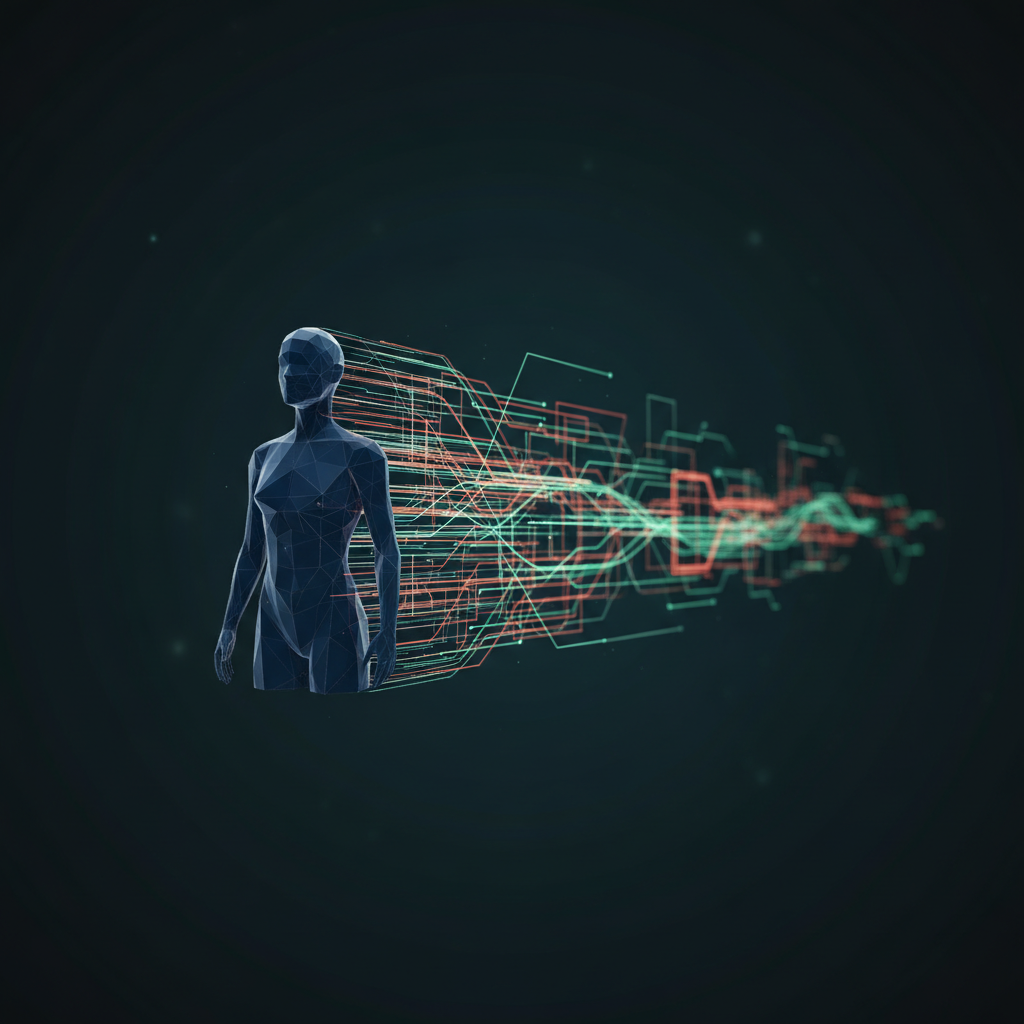
Navigating the Next Wave: Strategic Imperatives for Enterprise Digital Transformation by 2026
The first chapter of enterprise digital transformation was largely written out of necessity—a scramble to digitize processes, move to the cloud, and enable remote work. It was about survival. As we look ahead, the narrative is shifting dramatically. The conversation around Enterprise Digital Transformation 2026 is no longer about simply keeping up; it’s about building intelligent, resilient, and deeply human-centric organizations. This next wave moves beyond isolated technology adoption to a holistic integration of AI, data, and human ingenuity. For leaders, this isn’t just another IT project. It’s a fundamental reimagining of how value is created, how people work, and how the enterprise engages with the world. The strategic imperatives of today will define the market leaders of tomorrow.
Beyond Automation: The Rise of the AI-Augmented Workforce
The initial application of AI in the enterprise focused heavily on automating repetitive, rules-based tasks. By 2026, this will be considered table stakes. The new frontier is cognitive augmentation, where AI acts not as a replacement for human workers, but as a powerful collaborator that enhances their capabilities. This represents a core pillar of the future of digital transformation, focusing on synergy rather than substitution.
From Co-pilot to Co-creator
Think beyond chatbots and process automation. The next generation of AI tools will function as co-creators in complex, knowledge-based fields. Developers will work alongside AI that not only suggests code but architects entire modules. Marketers will use generative AI to brainstorm campaigns and produce first-draft content at scale. Financial analysts will partner with AI to model intricate scenarios and identify anomalies humans might miss. This shift requires a change in mindset—viewing AI as a partner in problem-solving, not just a tool for execution.
Re-skilling for a New Reality
This human-AI collaboration fundamentally alters the skills required within the workforce. A key component of any future of work digital strategy is a robust plan for continuous learning and re-skilling. The emphasis will move away from proficiency in specific software and toward uniquely human skills:
- Critical Thinking: Evaluating and questioning AI-generated outputs to ensure accuracy, context, and alignment with business goals.
- Ethical Oversight: Understanding the biases inherent in AI models and making responsible decisions about their application.
- Strategic Prompting: The ability to ask the right questions and provide the right context to AI systems to elicit the most valuable insights.
- Creative Synthesis: Combining AI-generated ideas with human experience and intuition to create truly innovative solutions.
The Hyper-Personalization Imperative: Redefining CX and EX
For years, personalization has been a goal. By 2026, hyper-personalization will be an expectation for both customers and employees. Fueled by vast data streams and predictive analytics, enterprises will be capable of delivering experiences tailored to the individual’s specific needs, preferences, and context in real-time. This is where AI in enterprise transformation delivers profound, measurable value.
Customer Experience (CX) Reimagined
Hyper-personalization in CX moves beyond recommending products based on past purchases. It’s about anticipating needs before the customer is even aware of them. Imagine a system that flags a potential service issue with a customer’s product and proactively schedules a maintenance call, or a B2B platform that provides a purchasing manager with a custom report on supply chain risks relevant to their specific industry just as they are planning their next quarter. This requires a unified data platform and intelligent systems that can connect dots across the entire customer journey.
Employee Experience (EX) as a Strategic Differentiator
The “war for talent” will increasingly be won by companies that provide a superior employee experience. A forward-thinking digital strategy applies the same principles of hyper-personalization internally. This means creating individualized career paths, suggesting bespoke learning modules based on performance and aspirations, and using analytics to promote well-being by identifying early signs of burnout. Technology becomes the enabler of a more supportive, engaging, and developmental work environment.
Weaving Sustainability into the Digital Fabric
One of the most significant digital transformation trends shaping the future is the integration of sustainability. By 2026, a digital strategy that ignores Environmental, Social, and Governance (ESG) criteria will be seen as incomplete and irresponsible. Sustainable enterprise transformation is not a separate initiative; it is an intrinsic part of the digital core.
Green IT and Operational Efficiency
Digital tools are uniquely positioned to drive sustainability goals. This includes using AI to optimize energy consumption in data centers and cloud infrastructure, deploying IoT sensors to create smart buildings that reduce waste, and leveraging data analytics to build more efficient and less carbon-intensive supply chains. The technology that powers the business can and must also power its green transition.
Data for Accountability and Reporting
Increasingly, investors, regulators, and customers demand transparent and verifiable data on ESG performance. A robust digital infrastructure is essential for collecting, analyzing, and reporting on these metrics accurately. Digital transformation provides the tools to move from vague sustainability pledges to data-backed, auditable proof of progress, building trust and enhancing brand reputation.
The Composable Enterprise: Agility as a Foundation
The days of monolithic, inflexible enterprise systems are numbered. The future belongs to the composable enterprise—an organization built on a flexible, modular architecture of interchangeable components. This approach, centered on APIs, microservices, and packaged business capabilities (PBCs), is designed for one primary purpose: rapid adaptation.
Building for Change, Not Just for Scale
Traditional IT architecture was built to scale existing processes. Composable architecture is built to accommodate constant change. When a new market opportunity arises or a competitive threat emerges, a composable enterprise can quickly reconfigure its existing digital capabilities or integrate new ones without disrupting the entire system. This modularity allows businesses to innovate at speed, running experiments in one area without risking the stability of the core business operations.
The API Economy as a Growth Engine
A composable approach naturally leads to a focus on APIs (Application Programming Interfaces). By exposing core business functions as secure and well-documented APIs, companies can not only streamline internal processes but also create new revenue streams. Internal capabilities—like logistics, payment processing, or data analysis—can be productized and offered to partners or customers, turning a cost center into a profit center and fostering a vibrant ecosystem of innovation.
Fortifying the Digital Core: Trust and Security by Design
As enterprises become more interconnected, data-driven, and reliant on AI, the potential attack surface expands exponentially. The traditional “castle-and-moat” approach to security is obsolete. By 2026, the standard will be security and trust embedded into every layer of the digital architecture from the very beginning.
Zero Trust Architecture as the Default
The guiding principle of a modern security strategy is “never trust, always verify.” A Zero Trust Architecture assumes that threats can exist both inside and outside the network. It enforces strict identity verification and access controls for every user and device trying to access resources on the network, regardless of their location. This granular control is critical for securing a distributed workforce and complex cloud environments.
AI-Powered Threat Intelligence
The same AI that drives business innovation will also be a critical tool for its defense. Advanced security platforms will use machine learning to analyze massive datasets in real-time, identifying patterns and anomalies that indicate a potential breach far faster than a human team could. This enables a shift from reactive incident response to proactive threat hunting and automated remediation, significantly reducing the “dwell time” of attackers within a system.
FAQs About Enterprise Digital Transformation 2026
Navigating the next phase of digital transformation raises important questions. Here are answers to some of the most common ones.
- What is the main difference between current digital transformation and the 2026 vision?
The primary difference is the shift from digitization to intelligence. Current transformation often focuses on moving analog processes to digital formats. The 2026 vision is about creating an intelligent, interconnected system where AI, data, and automation work together to augment human capabilities, predict outcomes, and enable hyper-personalization. - How will AI’s role in enterprise transformation evolve by 2026?
AI will evolve from a tool for automating simple tasks to a strategic partner in complex decision-making and creative work. Its role will shift from “doing” to “advising” and “co-creating,” working alongside humans in areas like strategy, design, software development, and market analysis. - Why is sustainability now a key part of digital transformation?
Sustainability has become a business imperative due to pressure from regulators, investors, and customers. Digital technology is the key enabler for a sustainable enterprise transformation, providing the tools to measure environmental impact, optimize resource consumption, and report on ESG metrics with accuracy and transparency. - What practical first step can my company take towards its 2026 transformation strategy?
A great first step is to conduct a comprehensive audit of your current data maturity and governance practices. High-quality, accessible data is the fuel for AI and personalization. Identify a single, high-impact business problem and launch a pilot project using AI augmentation to solve it. This builds momentum and demonstrates value early on. - How does this new phase affect the future of work for non-tech employees?
It elevates the importance of uniquely human skills. As AI and automation handle more routine and analytical tasks, the value of non-tech employees will be in their ability to think critically, collaborate effectively, manage complex stakeholder relationships, and provide ethical oversight. The focus will be on reskilling employees to work with and manage intelligent systems.
Conclusion: Building Your Future-Ready Enterprise
The journey toward Enterprise Digital Transformation 2026 is not about adopting every new technology that appears. It is a strategic endeavor focused on building an organization that is intelligent, agile, sustainable, and fundamentally human-centric. The imperatives are clear: embrace AI as a collaborative partner, deliver hyper-personalized experiences, embed sustainability into your digital DNA, build a composable and adaptable architecture, and secure it all with a foundation of trust.
This evolution requires a clear vision and a partner with deep technical expertise. Whether you’re looking to build intelligent systems, create seamless user experiences, or fortify your digital infrastructure, the path forward starts today.
Ready to navigate the next wave of transformation? Let’s build the future, together.
- Explore how we can integrate intelligence into your operations with our AI & Automation solutions.
- Build the flexible, composable foundation for your business with our expert Web Development team.
- Design intuitive and engaging experiences for your customers and employees with our UI/UX Design services.
- Discover why clients trust KleverOwl for their digital needs: Why Clients Trust KleverOwl.