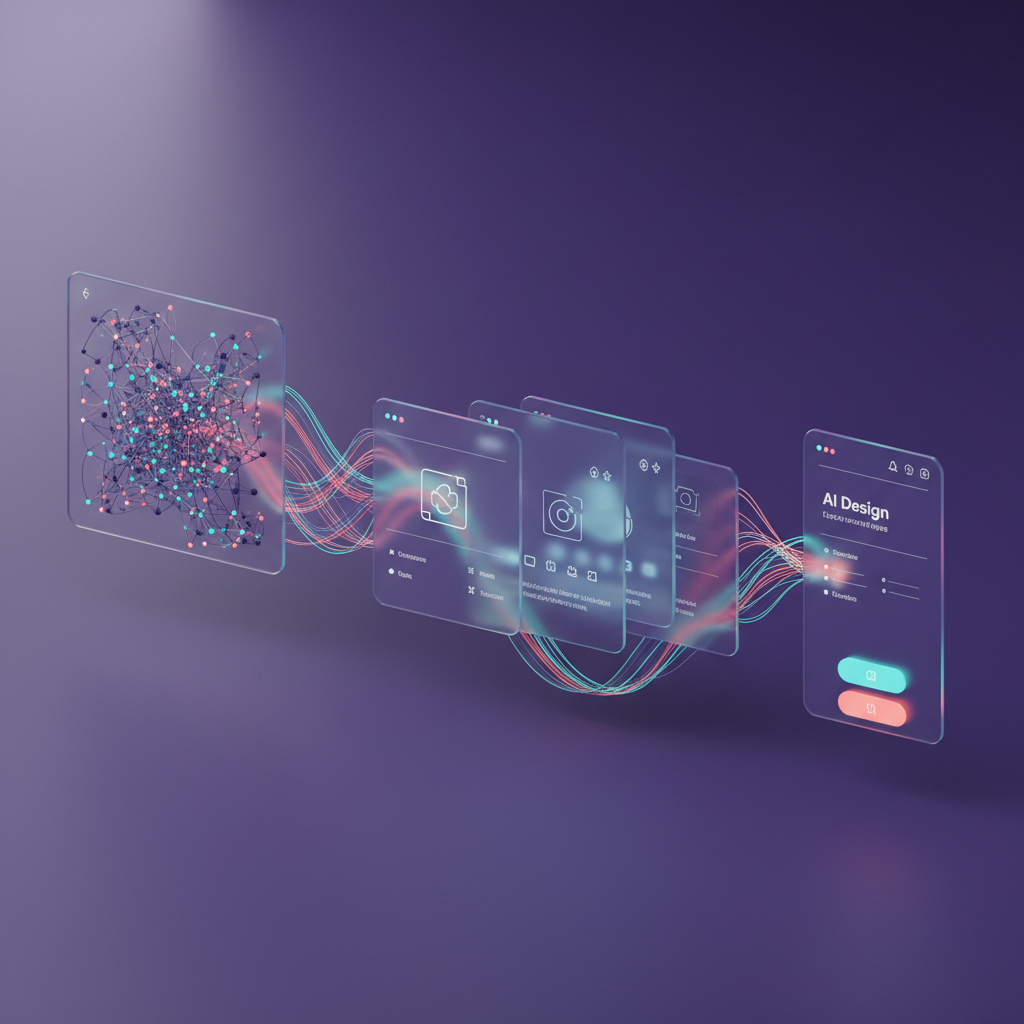
Google’s Stitch Leak: A Glimpse into the Future of Design with Gemini, 3D, and React
The tech world is constantly buzzing with leaks, but few have sparked as much conversation among product teams as the recent glimpses of Google’s internal project, ‘Stitch’. More than just another design tool, Stitch appears to be a fundamental rethinking of the entire product creation pipeline, powered by the formidable Gemini AI. This isn’t just an incremental update to our existing tools; it represents a potential seismic shift in the AI design agent workflow. By integrating a multimodal AI agent, a native 3D workspace, and a direct-to-code React export, Google is painting a picture of a future where the lines between idea, design, and production code become almost nonexistent. For designers, developers, and product managers, understanding what Stitch represents is essential for preparing for what comes next.
What is Google ‘Stitch’? Unpacking the Leaked Information
Based on internal demonstrations and leaked screenshots, Google Stitch is an advanced design and development environment. Unlike traditional tools that focus on vector-based 2D canvases, Stitch is built from the ground up with AI at its core. It’s described as an “AI-powered developer product” and a “gen-AI-native multimodal editor” aimed at accelerating the creation of high-quality user interfaces.
The name ‘Stitch’ itself is telling. It suggests the tool’s primary function: to seamlessly stitch together user needs, design concepts, and functional code. It aims to solve the chronic friction points in the product development lifecycle—the clumsy handoff from designer to developer, the time-consuming process of translating static designs into interactive components, and the struggle to maintain a consistent design system across a growing application.
At its heart is Google’s Gemini model, which allows designers to interact with the canvas using natural language, images, and even sketches. This positions Stitch not as a passive drawing tool but as an active collaborator in the creative process, making it one of the most anticipated Google Gemini design tools on the horizon.
The Three Pillars: Gemini AI, 3D Canvas, and React Export
The leaked information highlights three foundational components that make Stitch a noteworthy development. Each one addresses a specific, long-standing challenge in digital product design, and their combination is what creates a truly new kind of workflow.
The Gemini AI Design Agent
This is the brain of the operation. Instead of designers meticulously drawing every box, button, and text field, they can simply prompt the Gemini agent. For example, a designer could write, “Create a sign-up screen for a subscription-based podcast app with options for Google and email login.” The AI would not only generate the visual layout but also understand the underlying user flow, component states (default, hover, disabled), and accessibility requirements. This conversational interface allows for rapid iteration. A follow-up prompt could be, “Make the color palette more muted and professional, and use a sans-serif font,” allowing for refinements without touching a single pixel-level control.
The Native 3D Workspace
While most design tools remain firmly in the 2D plane, Stitch reportedly incorporates a 3D canvas. This is a forward-thinking move that anticipates the next era of computing. The rise of spatial computing with devices like the Apple Vision Pro and Meta Quest means that interfaces will increasingly break free from flat screens. The 3D UI workspace future requires tools that allow designers to think and build in three dimensions, considering depth, lighting, and spatial relationships. Even for traditional web and mobile apps, a 3D space can offer powerful ways to visualize complex user flows, component architecture, or animated transitions in a more intuitive, holistic manner.
Production-Ready React Export
This could be the most impactful feature for development teams. For years, the promise of “design-to-code” has been a siren song, often resulting in messy, unusable code that developers have to discard and rewrite from scratch. Stitch aims to solve this by creating a direct React export design system. Because the AI understands component-based architecture from the start, it doesn’t just export CSS and divs. It exports clean, structured, and production-quality React components. This means the design file is no longer a static picture of the final product; it is the final product’s front-end structure, drastically reducing implementation time and ensuring perfect fidelity between design and code.
A New AI Design Agent Workflow in Action
To understand the practical implications, let’s walk through a hypothetical project using Stitch. The process looks very different from the linear waterfall or even agile sprints we know today.
Phase 1: Ideation and Generation
A Product Manager and a UX Designer start a new Stitch project. Instead of a blank canvas, they are met with a prompt field. They write a detailed brief: “We need a dashboard for an e-commerce store owner. It should display key metrics like daily sales, top-selling products, and recent orders. The design should be clean, data-dense, and professional.” Stitch’s Gemini agent processes this request and generates three distinct, fully-formed dashboard layouts, complete with placeholder data and interactive charts.
Phase 2: Collaborative Refinement
The team reviews the options. They like the layout of option one but the typography of option three. The designer types, “Combine the card layout from the first option with the typography and color scheme of the third. Also, add a date-range filter to the main sales chart.” The interface updates in real-time. A developer joins the session and inspects the generated components, asking the AI, “Ensure all components are built using our internal Material UI design system tokens.” The AI refactors the components to match the existing system’s constraints.
Phase 3: Handoff and Implementation
Once the team is satisfied, the “handoff” is no longer a meeting and a folder of assets. The developer simply clicks “Export to React.” Stitch generates a clean codebase with well-named components, props, and state management hooks. The code is already responsive and accessible because those constraints were part of the initial design generation. The developer’s job shifts from translating a visual to implementing business logic and connecting the generated UI to backend APIs. This level of AI UX automation eliminates entire categories of manual work.
The Promise of a Flawless React Export Design System
The concept of a perfect design-to-code pipeline has been the holy grail for product teams. Current tools often fail because they treat design as a visual layer separate from the underlying code structure. They export absolute positioning and messy CSS that doesn’t align with how a developer actually builds an application.
Stitch’s approach is different because the AI is “code-aware” from the beginning. It doesn’t think in pixels; it thinks in components, props, and state. When a designer creates a button, the AI understands it needs a label, a variant (primary, secondary), and an `onClick` handler. This structural understanding is the key to generating a useful React export design system. It ensures that the exported code isn’t just visually similar but functionally and architecturally identical to what a skilled developer would write by hand. This drastically reduces bugs, improves consistency, and accelerates development cycles.
How AI UX Automation Redefines the Designer’s Role
A common fear surrounding advanced AI tools is that they will make human jobs obsolete. While Stitch will certainly automate many tasks traditionally done by UI designers, it’s more likely to elevate the role than eliminate it. The future of design tools points towards a partnership between human creativity and machine execution.
From Crafter to Conductor
The designer’s focus will shift away from meticulous, pixel-level execution and towards high-level strategic thinking. Their value will lie in:
- Problem Framing: Crafting the right prompts for the AI requires a deep understanding of user needs and business goals. The quality of the output depends on the quality of the input.
- System Thinking: Designers will become architects of complex design systems, defining the rules, constraints, and logic that the AI operates within.
- Curation and Taste: AI can generate endless options, but a human designer is still needed to provide taste, strategic direction, and brand alignment. They become the editor, curating the best solutions from the AI’s proposals.
- User Empathy: Understanding the psychology, motivations, and pain points of the end-user remains a uniquely human skill that guides the entire process.
In this new paradigm, the designer is less of a manual laborer and more of a creative director, guiding a powerful AI assistant to achieve the best possible outcome.
Implications for Development Teams and Agencies
For agencies like KleverOwl, tools like Stitch represent both a challenge and a tremendous opportunity. The challenge is that traditional UI design services focused on creating static mockups will become less valuable. The opportunity lies in providing higher-level strategic services.
Teams can move faster, build more consistent products, and spend less time on tedious implementation details. This frees up resources to focus on more complex challenges, such as:
- Conducting deeper user research to inform AI prompts.
- Building and maintaining the sophisticated design systems that AI agents will use.
- Focusing engineering efforts on complex backend logic, API integrations, and performance optimization rather than front-end boilerplate.
- Exploring new interaction paradigms in 3D and spatial computing.
The future for successful product teams is one where design and development are not separate disciplines but a single, integrated, AI-assisted function.
Frequently Asked Questions (FAQ)
Is Google Stitch a real product I can use?
As of now, Stitch is an internal Google project and has not been released to the public. The information available comes from leaks and internal presentations. It’s unclear if or when Google will release it as a commercial product, but it signals the direction the industry is heading.
How is Stitch different from existing AI design tools like Galileo or v0.dev?
While tools like Galileo and v0.dev are pioneers in using AI for UI generation, Stitch appears to be more comprehensive. Its key differentiators seem to be the deep integration of a powerful multimodal model like Gemini, the native 3D workspace for spatial design, and a focus on generating truly production-ready, component-based React code rather than just HTML/CSS snippets.
Will AI tools like Stitch make UI/UX designers obsolete?
It’s unlikely to make them obsolete, but it will fundamentally change the role. Repetitive UI production tasks will be automated, pushing designers to focus on higher-value work like UX strategy, user research, complex problem-solving, and creative direction. The designer’s role will become more strategic and less about manual execution.
What skills should designers focus on to prepare for this shift?
Designers should focus on skills that AI cannot easily replicate: strategic thinking, prompt engineering (clearly articulating design intent to an AI), systems thinking, user psychology, and a deep understanding of interaction principles. Technical literacy, especially regarding component-based frameworks like React, will also become increasingly valuable.
Conclusion: A New Chapter in Product Creation
Google’s Stitch is more than just an exciting piece of technology; it’s a profound statement about the future of digital product development. It envisions a world where the frustrating gaps between ideation, design, and coding are closed by an intelligent agent that serves as a partner to the entire product team. The integration of a conversational AI, a forward-looking 3D canvas, and a truly functional code export pipeline points to a workflow that is faster, more collaborative, and more efficient.
While Stitch itself may or may not become a public tool, the concepts it embodies are here to stay. The future of design tools is intelligent, integrated, and code-aware. For businesses looking to stay ahead, embracing this shift is not optional. It’s time to think about how AI can augment your own design and development processes, from automating workflows to building more sophisticated digital experiences.
If you’re ready to explore how AI and advanced development workflows can transform your projects, the team at KleverOwl is here to help. Whether you need to build a robust web application, refine your UI/UX strategy, or integrate AI and automation into your business, we have the expertise to guide you. Contact us today to start building the future.