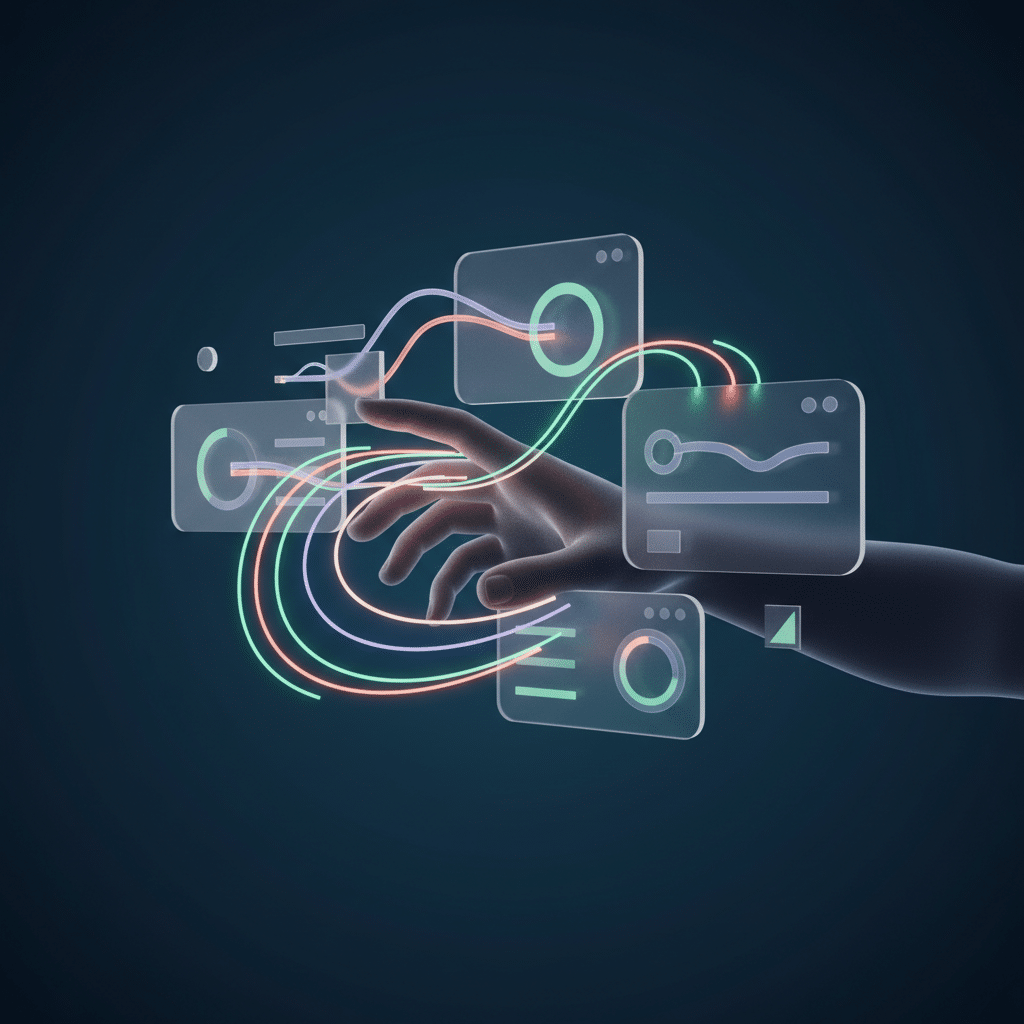
The Entrepreneur’s Guide to UI/UX Design in 2026
Imagine your current smartphone interface. Now, picture it looking as dated as a flip phone does today. That’s the potential rate of change we’re facing in digital experiences. For entrepreneurs, understanding the trajectory of UI/UX Design in 2026 isn’t just about staying current; it’s about building products that will remain relevant and engaging for years to come. The principles of user-centricity will hold, but the canvas, tools, and user expectations are undergoing a profound transformation. This guide explores the critical shifts in the future of UI/UX, outlining the trends, skills, and strategic considerations you need to start planning for today to ensure your business thrives tomorrow.
AI as a Design Partner, Not Just a Tool
The conversation around Artificial Intelligence in design is moving past simple automation. By 2026, AI will be an integrated collaborator in the design process, creating dynamic, personalized experiences that are impossible to achieve with static design alone.
Generative UI: Interfaces That Build Themselves
Generative AI will enable the creation of “living” interfaces that adapt in real-time to a user’s context, needs, and even emotional state. Instead of designing a single, one-size-fits-all dashboard, a designer in 2026 will define the rules, components, and goals for an AI model. The AI then assembles the optimal interface for each individual user, at that specific moment. For an e-commerce app, this could mean dynamically rearranging product categories based on a user’s past browsing behavior and current location. For a project management tool, it might mean highlighting tasks that an AI predicts are most critical for the user to complete next.
Hyper-Personalization at an Unprecedented Scale
Personalization today often means inserting a user’s first name into an email. By 2026, it will mean creating a completely unique user journey for every individual. AI will analyze vast datasets to understand user preferences, cognitive patterns, and behavioral tendencies. This allows for truly bespoke experiences, from adjusting the color contrast for a user with visual sensitivities to simplifying the language for a non-native speaker—all automatically. This deep level of personalization will be a key differentiator and a powerful driver of user loyalty.
Beyond the Glass: The Rise of Spatial and Multimodal Interfaces
The flat screen has dominated digital interaction for decades, but its reign is being challenged. The future of UI/UX is spatial, auditory, and tactile. As hardware like AR glasses and sophisticated haptic suits becomes more mainstream, user interaction will break free from the confines of a rectangular screen.
Designing for Mixed Reality (AR/VR)
With devices like Apple’s Vision Pro setting a new standard for spatial computing, designers must learn to think in three dimensions. UI/UX for mixed reality isn’t just about placing 2D windows in a 3D space. It’s about designing intuitive interactions with digital objects that feel present in the physical world. This includes considering factors like depth, occlusion (how digital objects interact with real-world objects), and user ergonomics to prevent physical and cognitive strain. For entrepreneurs, this opens up new possibilities for product visualization, remote collaboration, and immersive training applications.
The Growing Importance of Voice and Gesture
Voice User Interfaces (VUIs) and gesture controls will become primary methods of interaction, not just secondary features. A well-designed VUI is more than just a list of commands; it requires understanding natural language, conversation flow, and user intent. Similarly, gesture controls need to be intuitive, discoverable, and consistent across different applications. The challenge for designers will be to create a seamless experience where users can effortlessly switch between touch, voice, and gesture depending on their context and preference.
Inclusive Design as a Core Business Imperative
By 2026, accessibility will no longer be a checkbox item on a project plan; it will be a foundational element of good design and a non-negotiable legal and ethical standard. Businesses that fail to build inclusive products will not only alienate a significant portion of the population but also face reputational and financial risk. The focus will broaden from simple WCAG compliance to a more holistic, empathetic approach to inclusivity.
Designing for Neurodiversity and Cognitive Load
A key evolution in inclusive design is the focus on cognitive accessibility. This means creating experiences that are clear, predictable, and manageable for users with varying cognitive abilities, including those with ADHD, autism, or anxiety. This involves strategies like simplifying navigation, minimizing distractions, providing clear feedback, and allowing users to control the pace of their interactions. These design choices don’t just benefit a specific group; they create a better, less stressful experience for all users.
The Tangible Business Case for True Inclusivity
Building accessible products expands your potential market. The World Health Organization estimates that over 1 billion people live with some form of disability. Furthermore, inclusive design practices often lead to more robust and innovative solutions that benefit everyone. For example, captions designed for the hearing-impaired are now widely used by people watching videos in public spaces. Prioritizing inclusivity is not just the right thing to do; it’s a smart business strategy that enhances brand reputation and drives growth.
Data-Driven Empathy: Merging Analytics with Human Insight
The age-old debate between quantitative data and qualitative user research is becoming obsolete. The future lies in a symbiotic relationship between the two, where big data provides the “what” and “how,” while deep human insight provides the “why.” This fusion, which we can call “data-driven empathy,” will be central to creating meaningful products.
Balancing AI Insights with Human Stories
AI can analyze user behavior patterns at a scale no human team ever could, identifying friction points and predicting churn before it happens. However, data alone lacks context. A high drop-off rate on a signup form is a data point; a user interview revealing that the form felt “intrusive and creepy” is an insight. The successful UI/UX Design in 2026 process will involve using AI to identify areas of interest and then deploying qualitative methods—interviews, observation, and co-creation sessions—to uncover the human stories behind the numbers. AI chatbots and data intelligence can be invaluable tools here.
The Ethics of User Data in Design
With great data comes great responsibility. Designers and entrepreneurs will need a strong ethical framework for collecting and using user data. This means being transparent about what data is being collected and how it’s used to shape the user experience. The goal is to use data to serve the user, not to manipulate them. Building trust through ethical data practices will be a cornerstone of a positive UI/UX career outlook and business reputation.
The Essential UI/UX Skills You’ll Need in 2026
To navigate this evolving field, designers and the teams that hire them must focus on developing a new blend of technical and strategic competencies. The T-shaped designer—with deep expertise in one area and broad knowledge across others—will be more valuable than ever.
Key Technical and “Hard” Skills
- AI Literacy: Understanding the fundamentals of machine learning models to design effective prompts for generative AI tools and to collaborate with AI engineers on creating adaptive interfaces.
- 3D & Spatial Design Tools: Proficiency in software like Spline, Unity, or Unreal Engine will become as essential as Figma is today for anyone working on AR/VR or spatial computing products.
- Data Analysis & Interpretation: The ability to not just read but interpret data from analytics platforms, run A/B tests, and translate statistical findings into actionable design improvements.
- Prototyping for Multiple Modalities: Creating functional prototypes for voice, haptic, and gesture-based interactions, moving beyond simple screen-based mockups.
Crucial Strategic and “Soft” Skills
- Systems Thinking: The ability to see the bigger picture and understand how a single feature or design decision impacts the entire user journey and business ecosystem.
- Strategic Foresight: Proactively identifying emerging user behaviors and technological shifts to design products for the future, not just for the present.
- Cross-Disciplinary Collaboration: Working seamlessly with data scientists, AI engineers, ethicists, and product strategists, speaking their language and finding common ground.
- Ethical Reasoning: Critically evaluating the potential societal impact of a design, from algorithmic bias to data privacy, and advocating for the user’s well-being.
FAQs About UI/UX Design in 2026
Will AI replace UI/UX designers by 2026?
No, AI will augment UI/UX designers, not replace them. It will automate repetitive tasks like creating component variations or generating design systems, freeing up designers to focus on more strategic work: user research, problem-solving, ethical considerations, and creative direction. The role will evolve from “pixel pusher” to “experience architect.”
What is the most important UI/UX trend for an entrepreneur to focus on now?
The integration of AI into user experiences is the most impactful trend. Start thinking about how AI can create more personalized and predictive experiences within your product or service. This shift from static to dynamic interfaces will be the biggest competitive differentiator. Partnering with a team experienced in AI and Automation can give you a significant head start.
Is coding still a valuable skill for a UI/UX designer?
Yes, but its nature is changing. While understanding HTML/CSS/JavaScript remains valuable, a conceptual understanding of how AI models, APIs, and complex data systems work is becoming equally, if not more, important. This knowledge enables designers to create feasible, innovative concepts and communicate effectively with development teams.
How can my business start preparing for these future UI/UX trends today?
Begin by fostering a culture of continuous learning and user-centricity. Invest in robust user research to deeply understand your customers’ evolving needs. When planning new projects, ask how emerging tech like AI or spatial computing could solve user problems in new ways. Start with small, experimental projects to build institutional knowledge before making large-scale investments.
Conclusion: Design Your Future, Today
The path forward for UI/UX Design in 2026 is one of exciting complexity and opportunity. The core mission remains the same: to solve human problems through thoughtful design. However, the tools, mediums, and user expectations are expanding dramatically. For entrepreneurs, success will depend on embracing this evolution. It means seeing AI as a creative partner, looking beyond the screen to spatial and multimodal experiences, and embedding inclusivity and ethics into the very fabric of your product development process.
Preparing for this future is not about predicting it with perfect accuracy; it’s about building a resilient, adaptable, and forward-thinking approach to design. By focusing on the trends and skills outlined here, you can ensure your business is not just ready for 2026, but is actively shaping the user experiences that will define it.
Ready to build a future-proof digital product? The expert team at KleverOwl combines deep expertise in UI/UX Design with powerful capabilities in Web Development and Mobile App creation. Contact us today to discuss how we can bring your vision to life.