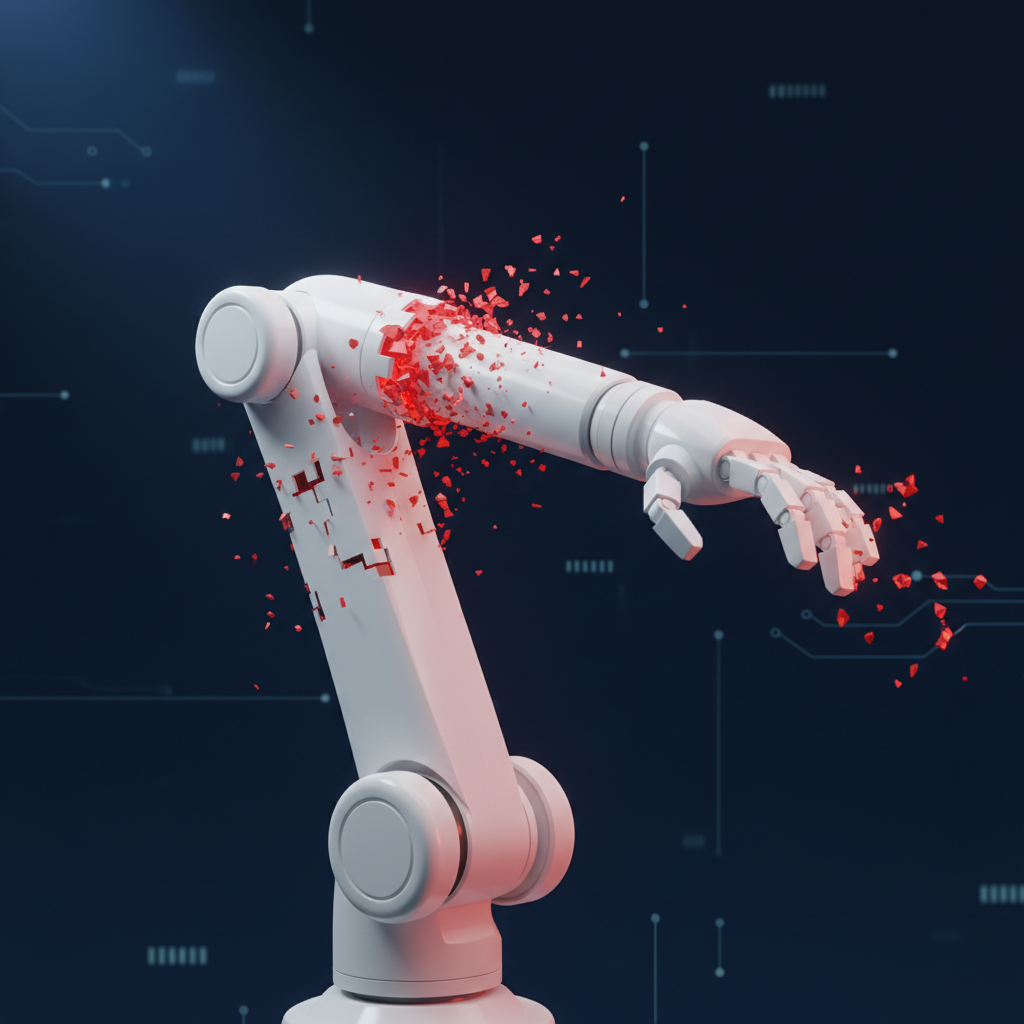
The Stryker Attack: A Sobering Lesson in Geopolitical Cyber Warfare and Supply Chain Disruption
In the complex world of global manufacturing, a production halt is more than an inconvenience; it’s a shockwave that travels through the entire supply chain. When medical technology giant Stryker faced a cyberattack that disrupted its manufacturing and shipping, the incident provided one of the most critical Stryker cyberattack lessons for modern enterprises. An Iran-linked hacking group deployed destructive “wiper” malware, not to steal data or demand a ransom, but to cause chaos. This attack moves beyond a typical data breach, serving as a stark case study on the convergence of geopolitical cyber warfare, the devastating potential of wiper malware, and the profound vulnerability of our interconnected critical infrastructure. It forces organizations, particularly in healthcare and manufacturing, to re-evaluate their entire security and recovery posture.
Anatomy of the Attack: What Happened at Stryker?
According to reports from cybersecurity firm SecurityWeek and researchers at Mandiant, the attack on Stryker was orchestrated by a threat actor tracked as UNC1549, also known as Tortoiseshell. This group has established links to Iran’s Islamic Revolutionary Guard Corps (IRGC), a detail that immediately shifts the motive from financial gain to state-sponsored disruption. The attackers didn’t deploy ransomware; their weapon of choice was a custom-built piece of destructive malware named “Sugarush.”
The Weapon: Sugarush Wiper Malware
Unlike ransomware, which encrypts files and offers a key in exchange for payment, wiper malware has a single, malicious purpose: to permanently erase or corrupt data, rendering systems and devices completely inoperable. The deployment of Sugarush against Stryker’s systems was a calculated act of digital sabotage. The goal was not to extort money but to cripple operations by destroying the very data and configurations that manufacturing and logistics systems depend on. This act of pure destruction meant there was no negotiation, no decryption key, and no path to recovery other than a complete rebuild from backups.
The Impact: From Digital Breach to Physical Disruption
The consequences were immediate and tangible. The attack successfully disrupted parts of Stryker’s manufacturing and shipping operations. In a global economy reliant on just-in-time delivery, this is a catastrophic outcome. For a company that produces critical medical devices—from surgical equipment to implants—a delay in shipping can have a direct impact on patient care and hospital operations. This incident powerfully demonstrates how a few lines of malicious code can halt physical production lines and sever vital links in the global healthcare supply chain security framework.
The ‘Why’: Nation-State Cyber Threats Target the Private Sector
To fully grasp the implications of the Stryker attack, we must look beyond the technical details and understand the geopolitical context. The involvement of an IRGC-linked group is a clear indicator that this was not a random act of cybercrime. It was a strategic move in a larger, ongoing shadow war fought in cyberspace.
Nation-state cyber threats are characterized by their objectives. They are often retaliatory, designed to project power, or aimed at destabilizing a rival nation’s economy and critical infrastructure. Iran-linked actors have a documented history of using wiper attacks for political ends, most famously with the “Shamoon” malware that targeted Saudi Aramco. By targeting a major U.S. medical technology firm, the attackers achieve several goals:
- Disrupting Critical Infrastructure: The healthcare sector is one of the 16 designated critical infrastructure sectors in the United States. An attack on a key player like Stryker is an attack on the nation’s ability to provide essential medical services.
- Economic Damage: Halting production and shipping for a Fortune 500 company inflicts direct economic harm and can erode market confidence.
- Psychological Impact: Such attacks create uncertainty and fear, demonstrating that foreign adversaries can reach deep into another country’s private sector and cause real-world harm.
The key takeaway is that private companies, especially leaders in essential industries, are no longer bystanders in international conflicts. They are on the front lines of geopolitical cyber warfare, whether they choose to be or not.
The Weapon of Choice: Understanding the Destructive Power of Wiper Malware
The selection of wiper malware is a deliberate and menacing choice. It signals an intent to destroy, not to negotiate. This fundamentally changes the defensive calculus for any organization. While ransomware is a serious financial and operational threat, wiper malware is an existential one.
Not Your Typical Ransomware
The core difference lies in intent and recoverability. Ransomware is a business model for criminals. Wipers are a weapon for saboteurs. With ransomware, the attacker wants your systems to be recoverable so you’ll pay. With a wiper, the attacker’s mission is successful only when your systems are unrecoverable. This distinction is vital for disaster recovery planning. A plan built around negotiating a ransom is useless against an attack where no ransom is demanded.
The Unforgiving Impact on Industrial Control Systems
In a manufacturing environment, the impact is magnified. Wiper malware doesn’t just delete spreadsheets; it can wipe the configuration files from programmable logic controllers (PLCs), erase the operational data from human-machine interfaces (HMIs), and corrupt the databases that manage inventory and logistics. This directly threatens industrial control system security. Restoring these complex, interconnected Operational Technology (OT) systems is not as simple as restoring an IT server. It often requires specialized engineering expertise, vendor support, and a complete, time-consuming recalibration of physical machinery, leading to prolonged downtime and massive financial losses.
A Critical Weakness Exposed: The Fragility of the Healthcare Supply Chain
The attack on Stryker casts a harsh light on the inherent vulnerabilities of the modern supply chain, particularly in the healthcare sector. Decades of optimization for efficiency—through principles like lean manufacturing and just-in-time inventory—have created a highly effective but fragile system.
An attack that halts production at a single, major medical device manufacturer can create a domino effect. Hospitals that rely on a steady supply of Stryker’s products may be forced to postpone surgeries. Distributors face order backlogs, and ultimately, patient care can be compromised. This incident highlights several key vulnerabilities in healthcare supply chain security:
- Interconnectivity: Digital systems that connect suppliers, manufacturers, and healthcare providers create a broad attack surface. A compromise in one part of the chain can quickly impact others.
- Lack of Redundancy: The focus on efficiency has often come at the expense of redundancy. Many supply chains have single points of failure that, if disrupted, can cause a system-wide collapse.
- Insufficient OT Security: Many manufacturing facilities have underinvested in securing their OT environments, which were traditionally isolated but are now increasingly connected to IT networks and the internet.
Actionable Strategies for Wiper Malware Defense
The Stryker cyberattack lessons are clear: hope is not a strategy. Organizations must actively prepare for destructive attacks. Building resilience requires a multi-layered approach that prioritizes containment and recovery.
1. Architect for Resilience with Network Segmentation
A flat network is a threat actor’s playground. Proper network segmentation is the most effective way to contain the spread of malware, including wipers. Create strict boundaries between your IT and OT networks. Use firewalls and access controls to ensure that a compromise in the corporate email system (IT) cannot pivot to the factory floor controls (OT). Isolate critical systems into their own secure enclaves. If a wiper is deployed, segmentation can limit its blast radius to a single segment, protecting the rest of the organization.
2. Master the Art of Immutable Backups
When facing a wiper, your backups are your only lifeline. This is the core of effective wiper malware defense. A standard backup strategy is not enough. You must adopt the 3-2-1-1-0 rule:
- 3 copies of your data.
- On 2 different types of media.
- With 1 copy off-site.
- With 1 copy offline or “air-gapped” (physically disconnected) or immutable (unable to be altered or deleted).
- With 0 errors after testing your recovery process.
Cloud-based immutable storage and physical air-gapped backups are your best defense, as they prevent malware from deleting or encrypting your recovery data.
3. Develop a Destructive Attack Playbook
Your incident response plan must have a specific annex for destructive attacks. A ransomware playbook that includes steps for negotiation or ransom payment is irrelevant. Your wiper playbook should focus on:
- Rapid Containment: How to quickly identify and isolate affected systems to stop the bleeding.
- Damage Assessment: A clear process for determining the full scope of data and systems destroyed.
- “Break Glass” Procedures: Pre-authorized protocols for taking critical systems offline to prevent further spread.
- Full Restoration Protocols: A step-by-step guide for rebuilding systems from your immutable, air-gapped backups.
This plan must be regularly tested through tabletop exercises and technical drills. This is the essence of effective disaster recovery planning.
Frequently Asked Questions About the Stryker Cyberattack
Was the Stryker attack a form of ransomware?
No. It was a wiper malware attack. The goal was not to extort a ransom by encrypting files but to permanently destroy data and disrupt operations, which is a hallmark of state-sponsored cyber warfare.
Why would a nation-state target a medical device company?
Targeting critical infrastructure sectors like healthcare is a strategic move in geopolitical cyber warfare. It aims to create societal disruption, inflict economic damage, and project power by demonstrating the ability to cause tangible harm to a rival nation’s essential services.
What is the most important defense against wiper malware?
While preventative controls are crucial, the single most important defense is a robust and frequently tested disaster recovery planning process. This must include immutable or air-gapped backups, as they provide the only reliable path to restoration after a destructive attack.
Can standard antivirus or EDR solutions stop a wiper?
They might, but sophisticated nation-state cyber threats often involve custom malware designed to evade signature-based detection. A defense-in-depth strategy is necessary, combining endpoint protection (EDR) with network segmentation, strict access controls, and behavioral monitoring to detect and block anomalous activity before a wiper can be executed.
From Case Study to Strategic Imperative
The attack on Stryker is more than just another headline. It is a defining moment that underscores the fragile intersection of global commerce, technology, and international conflict. The primary Stryker cyberattack lessons teach us that the line between corporate security and national security has effectively been erased. For organizations in manufacturing, healthcare, and other critical sectors, preparing for destructive attacks is no longer a theoretical exercise but a strategic imperative for survival.
Building true resilience requires a shift in mindset—from simply preventing breaches to ensuring operational continuity in the face of a successful, destructive attack. This involves integrating robust security architecture with comprehensive recovery protocols. If your organization is grappling with how to secure its operations against these advanced threats, the first step is a thorough assessment of your current posture. Don’t wait for a crisis to expose your vulnerabilities.
Strengthen your defenses and prepare for the new reality of cyber threats. Contact KleverOwl’s cybersecurity experts today to discuss how we can help you build a resilient security framework and a robust disaster recovery plan tailored for the challenges of today’s threat environment.