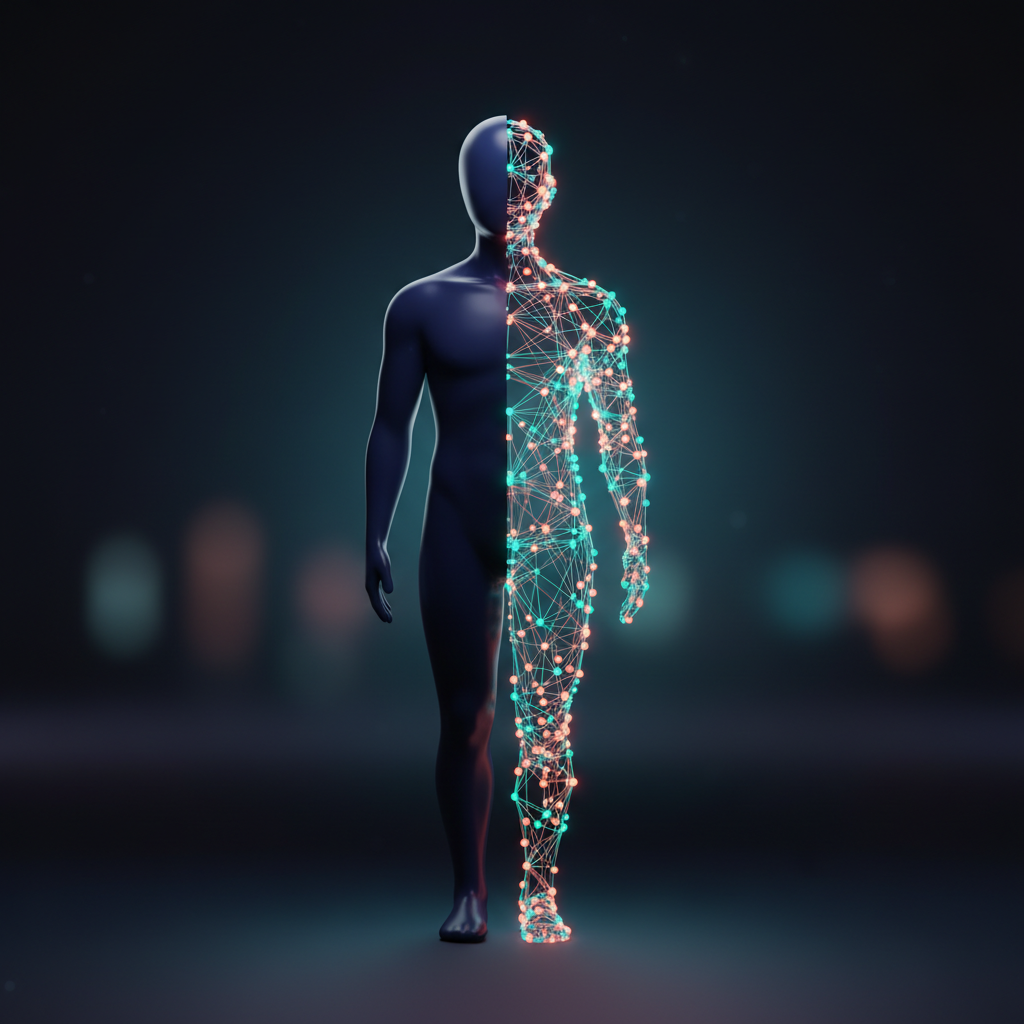
The Great Blur: How AI Coding is Redefining the Software Developer’s Role and Empowering the ‘Citizen Builder’
For decades, the image of a software developer was clear: a specialist hunched over a screen of cryptic text, meticulously crafting the digital world line by line. This expertise formed a hard barrier between those who built software and those who merely used it. Now, that barrier is becoming porous. The rise of sophisticated AI coding assistants means that a well-phrased English sentence can generate functional code, blurring the line between user and builder. This fundamental shift is forcing a re-evaluation of AI coding developer roles and giving rise to a new class of creator: the citizen builder. The future of software development isn’t about replacing humans with machines; it’s about a profound change in how we create, who gets to create, and what a developer actually does all day.
The End of Code as We Know It? Not Quite.
The headlines can be dramatic, suggesting an impending obsolescence for human coders. While AI’s ability to generate code from natural language is impressive, it’s more of an evolutionary leap than an extinction event. Tools like GitHub Copilot, Amazon CodeWhisperer, and various LLM-powered IDE plugins are best understood as incredibly powerful collaborators, not autonomous replacements. They excel at accelerating the development process, not owning it from start to finish.
Think of them as the ultimate autocomplete. They can instantly generate boilerplate code, write standard functions, create unit tests, and even translate code from one language to another. This removes a significant amount of tedious, repetitive work from a developer’s plate. A task that might have taken an hour of searching documentation and typing standard patterns can now be completed in seconds with a single, well-crafted comment or prompt.
However, this is where their current utility finds its limit. AI models don’t possess true understanding. They are pattern-matching engines, trained on vast datasets of existing code. They lack business context, strategic foresight, and the creative spark needed for true innovation. The critical human element remains indispensable for:
- Architectural Design: Planning the high-level structure of a complex application, ensuring it’s scalable, maintainable, and secure.
- Complex Problem-Solving: Devising novel algorithms and debugging intricate, non-obvious issues that AI-generated code might introduce.
- Security and Ethics: Auditing AI-generated code for vulnerabilities and ensuring the final product aligns with ethical standards and business goals.
The developer isn’t disappearing; they’re being elevated. They are moving from being bricklayers to being the architects, engineers, and quality inspectors of the digital construction site.
The Rise of the ‘Citizen Builder’
Perhaps the most significant consequence of AI coding is the empowerment of the non-technical user. For years, the low-code/no-code movement promised to democratize software development, allowing business users to create simple applications with drag-and-drop interfaces. Now, the low-code AI impact is pouring gasoline on that fire, creating the “citizen builder.”
Who is the Citizen Builder?
A citizen builder (or citizen developer) is an employee without a formal software engineering background who creates applications to solve immediate business problems. This could be a marketing manager who needs a tool to automate social media reporting, a financial analyst building a custom data visualization dashboard, or an HR representative creating a streamlined onboarding workflow.
Previously, their options were limited to wrestling with spreadsheets or joining a long IT ticket queue. With the advent of citizen developer AI tools, they can now simply describe what they need in plain English. For example:
- “Create an app that pulls daily sales data from Salesforce, compares it to last week’s numbers, and sends a summary to the #sales Slack channel.”
- “Build a form for customer feedback that, upon submission, creates a new ticket in Jira and assigns it to the support team.”
AI-powered platforms can interpret these requests and generate a functional application, turning a business expert into a software creator without them ever having to learn Python or JavaScript. This is the core of democratizing software creation—placing the power to build directly into the hands of those who best understand the problem.
Shifting Skillsets: From Syntax Slinger to System Architect
As AI handles more of the granular coding, the definition of valuable developer skills is changing. The focus is shifting away from memorizing syntax and towards higher-level strategic thinking. The most successful developers in this new era will be those who adapt their skillsets to guide, manage, and validate AI’s output. The evolution of AI coding developer roles requires a new kind of expertise.
The Ascendance of Prompt Engineering
Interacting with a coding AI is a skill in itself. Effective prompt engineering skills are becoming paramount. This isn’t just about asking a simple question; it’s about providing the AI with the right context, constraints, and examples to generate precise, efficient, and secure code. A great prompt engineer understands programming fundamentals so deeply that they can guide the AI like a senior developer mentoring a junior. They know how to phrase a request to avoid common pitfalls, specify a particular design pattern, or ensure the output adheres to company coding standards.
The Architect and the Reviewer
With less time spent on routine coding, developers can dedicate more energy to system architecture. Their primary role becomes designing the robust skeletons of applications—defining databases, planning API interactions, and ensuring the overall structure is sound. Subsequently, they act as meticulous code reviewers. AI-generated code can be subtly flawed, inefficient, or contain security holes. The human developer is the final gatekeeper, using their experience to audit, refine, and approve the code before it goes into production.
The Integrator and Problem-Solver
Modern applications are rarely built from scratch. They are complex mosaics of third-party services, internal APIs, and legacy systems. A key developer role in the AI era is that of the master integrator. They will be responsible for weaving together various components, many of which might be individually generated by AI, into a cohesive and functional whole. This requires a deep understanding of the entire tech stack and the ability to diagnose problems that span multiple systems.
Democratizing Software Creation: Opportunity and Oversight
The ability for anyone in an organization to build their own tools is a powerful proposition. This widespread democratizing software creation brings immense opportunity but also introduces significant new risks that must be managed carefully.
The Opportunities
- Accelerated Innovation: Business units can rapidly prototype and deploy solutions to their own specific problems, without the delays of a centralized IT development cycle.
- Hyper-Personalization: Teams can build niche tools perfectly tailored to their unique workflows, boosting productivity in ways that off-the-shelf software cannot.
- Closing the Business-IT Gap: When the people with the business knowledge are the ones building the tools, the final product is more likely to meet the actual need, reducing miscommunication and rework.
The Risks and the Need for Governance
- Shadow IT: When employees build applications without IT oversight, it can lead to a chaotic and unmanageable ecosystem. These apps may not be secure, compliant, or properly maintained.
- Technical Debt: A quickly built solution by a non-expert might solve an immediate problem but be built on a shaky foundation, making it impossible to scale or maintain in the long run.
- Security Vulnerabilities: A citizen builder is unlikely to be an expert in data security. Applications they create could inadvertently expose sensitive company or customer data, creating a massive liability.
The solution isn’t to forbid citizen development but to embrace it within a structured framework. Companies need to provide sanctioned, secure platforms and establish clear governance policies for the creation, deployment, and maintenance of these user-built applications.
The New Symbiosis: How Professionals and Citizen Builders Will Collaborate
The future of software development is not a battle between professional developers and citizen builders. Instead, it’s a new, symbiotic relationship where each group enhances the other’s capabilities, with AI serving as the connective tissue.
In this model, professional software developers at companies like KleverOwl take on the role of enablers and guardians. Their responsibilities evolve to:
- Building the “Digital Factory Floor”: Creating and maintaining the core platforms, robust APIs, and secure, pre-approved components that citizen builders can use as building blocks.
- Setting the “Guardrails”: Establishing the governance, security protocols, and best practices that ensure applications built by non-developers are safe, reliable, and compliant.
- Acting as Expert Consultants: Serving as the top tier of support, stepping in to help citizen builders with complex challenges, optimizing their creations, and integrating their solutions into the broader corporate ecosystem.
This tiered approach allows for maximum efficiency. Citizen builders handle the highly specific, team-level applications, freeing up the professional development team to focus on the large-scale, mission-critical systems that form the backbone of the business. It’s a collaborative model that harnesses the specialized knowledge of everyone in the organization.
Frequently Asked Questions
Will AI coding tools completely replace software developers?
No. AI tools will augment developers, not replace them. They will automate repetitive coding tasks, allowing developers to focus on higher-value work like system architecture, creative problem-solving, security oversight, and complex integrations. The role is evolving to be more strategic.
What are the most important skills for the future of software development?
Memorizing syntax will become less important. The key skills will be strong fundamentals in computer science, system design, creative problem-solving, and meticulous code review. Additionally, expertise in prompt engineering skills—the ability to effectively instruct and guide AI—will be crucial for maximizing efficiency and quality.
What is a ‘citizen developer’ and how does AI empower them?
A citizen developer is a user with deep business knowledge but little to no formal coding training who builds applications to solve their own team’s problems. Citizen developer AI empowers them by allowing them to create software using natural language commands, drastically lowering the technical barrier to entry and enabling them to turn their ideas directly into functional tools.
What are the primary risks of citizen developers using AI to code?
The main risks are the proliferation of “shadow IT,” where applications are built without oversight, leading to security vulnerabilities, data leaks, and high levels of unmanageable technical debt. Without proper governance, these well-intentioned solutions can become major liabilities.
Conclusion: Navigating the Great Blur Together
The line between the software user and the software builder is undeniably blurring, and this transformation is reshaping the industry. The future of software development is not one of obsolescence but of evolution. Professional developers are becoming the strategic architects of a broader creative ecosystem, while citizen builders are being empowered to solve problems at an unprecedented speed.
This new era requires a change in mindset for businesses and developers alike. It’s about embracing collaboration, establishing strong governance, and seeing AI not as a threat, but as a powerful tool for unlocking human potential. The challenge lies in navigating this shift wisely, ensuring that the innovation unleashed by democratizing software creation is both powerful and secure.
At KleverOwl, we are at the forefront of this evolution. Whether you need to build the robust core systems that empower your citizen builders, or design the intuitive interfaces that make their tools a joy to use, we have the expertise to guide you. Let’s build the future together.
- Ready to build a powerful, secure AI-driven application? Explore our AI & Automation services.
- Need an exceptional user experience for your next project? Check out our UI/UX Design expertise.
- Concerned about the security implications of this new era? Contact us for a cybersecurity consultation.