The End of an Era: How Claude Code & Google’s AI Are Redefining Web Creation
For decades, the process of building for the web has followed a familiar path: a designer meticulously crafts a visual mockup, a developer painstakingly translates it into code, and a long cycle of revisions ensues. This separation of design and development, while established, has always been a source of friction, delays, and “lost in translation” moments. But that era is rapidly coming to a close. The conversation around the AI in web design future is no longer theoretical; it’s happening in real-time, driven by a new class of powerful, accessible generative AI tools. Specifically, sophisticated models like Anthropic’s Claude and advanced multimodal AI initiatives from Google are not just speeding up old workflows—they are creating entirely new ones, merging ideation, design, and development into a single, fluid process.
From Static Mockups to Intelligent, Interactive Prototypes
The first major shift is happening at the very beginning of the creation process: ideation and prototyping. For years, designers have been constrained by their tools, creating static images or click-through prototypes in Figma or Sketch that only simulate interactivity. While useful, these mockups are a pale imitation of the final product and require significant manual effort to create and update.
The Rise of Multimodal AI in Design
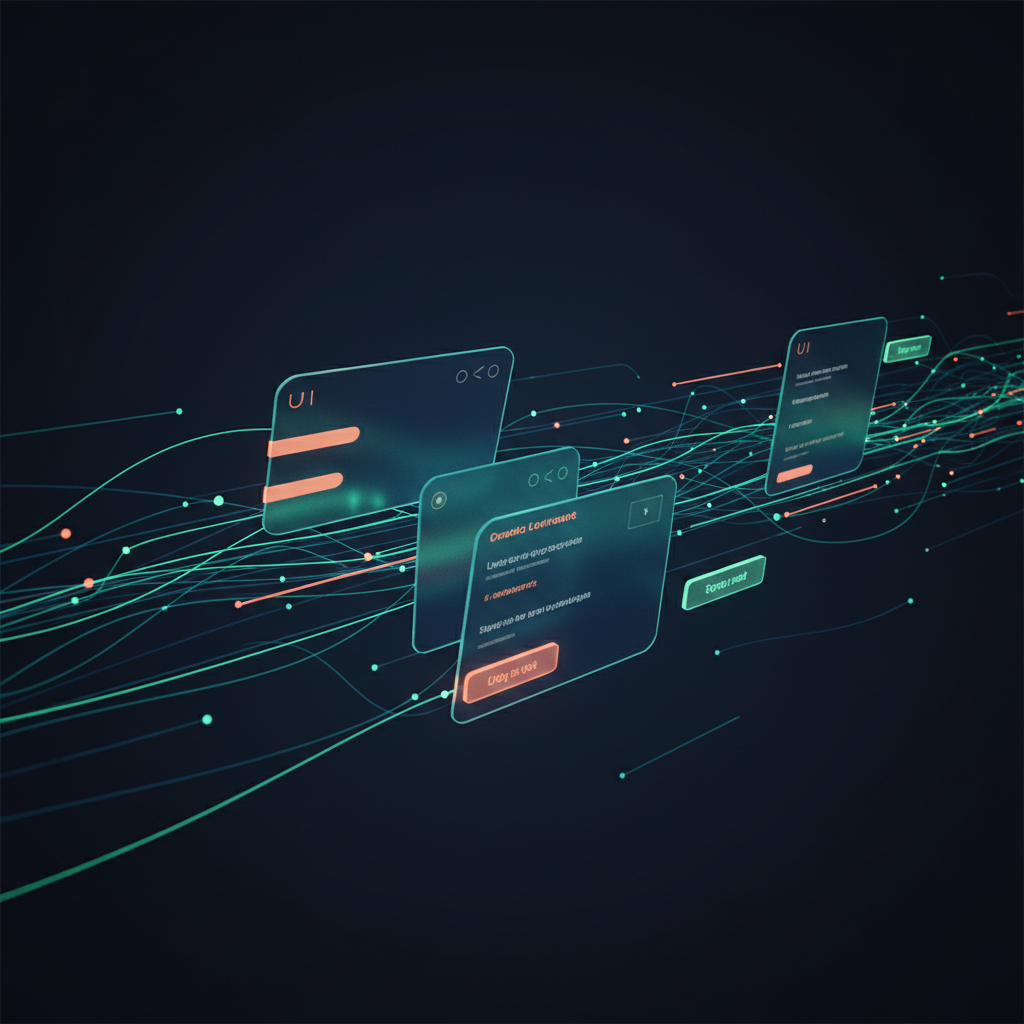
New AI systems are changing this dynamic. While a tool named “Google Stitch 2.0” might be more conceptual than a public product, it represents the direction major tech players are heading—think Google’s Project IDX and the multimodal capabilities of its Gemini model. These tools can interpret a combination of inputs, including text descriptions, rough sketches, wireframes, and even existing brand guidelines, to generate high-fidelity, interactive prototypes in seconds. A designer can now simply describe a user flow or sketch a layout on a tablet and watch as the AI assembles a functional prototype built with real web components. This fundamentally alters the design process from one of manual construction to one of creative direction.
Benefits of AI-Powered Prototyping
- Unprecedented Speed: Generate dozens of design variations for stakeholder review in the time it used to take to create one.
- True Interactivity: Test user flows with prototypes that behave like real applications, complete with animations, form validations, and conditional logic.
- Effortless Iteration: Make changes with simple text commands like, “Change the color palette to be warmer and make the primary call-to-action button more prominent.” This makes the feedback loop incredibly tight.
Claude’s Impact: More Than a Code Generator, It’s a Development Partner
Once a design is approved, the baton is traditionally passed to a developer. This is where the second monumental shift occurs, driven largely by the significant Claude Code impact. Unlike earlier code assistants that often produced clunky, inefficient, or error-prone snippets, advanced models like Claude 3 Opus are built with a deep understanding of software architecture, best practices, and the nuances of multiple programming languages.
This is a core component of the new wave of generative AI web development. A developer can now take the interactive prototype or a detailed feature description and use Claude as a collaborative partner to write production-quality code. The key difference is the quality of the interaction. It’s not just a one-shot generation; it’s a conversation.
How Developers Work with Advanced AI
A typical workflow might look like this:
- Prompting for Structure: “Generate a responsive, accessible React component for a user profile card. It should include an avatar, name, username, a short bio, and a ‘Follow’ button. Use TypeScript and style it with Tailwind CSS.”
- Refinement and Refactoring: “The bio text can be long. Add a ‘show more’ feature that truncates the text after three lines. Also, add a loading state for the ‘Follow’ button and handle the API call logic.”
- Debugging and Optimization: “I’m getting a re-rendering issue in this component. Can you analyze this code and suggest a fix using `React.memo` or the `useCallback` hook?”
- Test Generation: “Write unit tests for this component using Jest and React Testing Library to cover the button click and text truncation functionality.”
Claude doesn’t just write code; it explains its reasoning, offers alternative approaches, and helps debug existing codebases. This frees developers from writing tedious boilerplate and allows them to focus on more complex challenges like system architecture, security, and performance optimization.
Bridging the Great Divide: A Unified Design and Development Workflow
The true power of these tools emerges when they are used together, creating a seamless, unified workflow that erases the traditional line between design and development. The friction-filled handoff process is replaced by a continuous, collaborative loop facilitated by AI.
Imagine a product team starting a new feature. A designer, using a multimodal tool, generates an interactive prototype from a project brief. This prototype isn’t just a collection of images; its underlying structure is already defined in a way that an AI like Claude can understand. The developer then points Claude to this prototype, and it automatically scaffolds the entire front-end application, creating the necessary file structures, components, and routing. The designer and developer can then sit side-by-side (or collaborate remotely) and make real-time changes using natural language, seeing the updates reflected instantly in both the visual design and the underlying code.
This synergy accelerates the entire development lifecycle, reduces miscommunication, and ensures the final product is a true reflection of the initial vision. This is the essence of a modern, efficient approach to generative AI web development.
Automated Web Design: Hyper-Personalization and Optimization at Scale
Beyond initial creation, AI is also transforming how we test, optimize, and personalize web experiences. Manually creating and deploying A/B tests for a landing page can be a time-consuming process. With generative AI, this becomes trivial.
AI-Driven A/B Testing
A marketer or designer can now issue a simple prompt: “Generate five variations of this landing page, each with a different headline and call-to-action focused on a different user benefit. Deploy them for an A/B test and monitor conversion rates.” The AI can create the variants, deploy them, and even analyze the results to recommend a winner. This allows for continuous optimization at a pace and scale previously unimaginable.
Furthermore, this leads to true automated web design and personalization. Instead of serving the same page to every visitor, AI can analyze a user’s data—referral source, past behavior, demographic information—and dynamically generate a version of the page tailored specifically to them in real-time. This could mean changing imagery, reordering content blocks, or highlighting different product features, all to maximize engagement and conversion.
The New Roles: From Builders to Architects and Curators
A common fear surrounding AI is job displacement. While some tasks will certainly be automated, the reality is a fundamental shift in roles, not an elimination of them. The AI in web design future requires professionals to move up the value chain, from being hands-on builders to strategic thinkers.
The Designer as Creative Director
Designers will spend less time in Figma pushing pixels and more time on user research, journey mapping, and brand strategy. They will become the creative directors for the AI, guiding it with well-crafted prompts and curating the best of its outputs. Their expertise in aesthetics, usability, and human psychology becomes more valuable than ever. These new responsibilities cement their importance as users of sophisticated AI tools for designers.
The Developer as System Architect
Developers will write less boilerplate code for UI components and more of the critical logic that powers applications. Their focus will shift to building robust backend systems, designing scalable cloud infrastructure, ensuring application security, and overseeing the integration of AI-generated code. They become the architects and quality assurance gatekeepers, ensuring the final product is performant, secure, and maintainable.
Frequently Asked Questions
Will AI completely replace web designers and developers?
No. AI is a powerful tool that augments human capabilities, it doesn’t replace them. The future is one of collaboration. AI can generate options, but it requires a human expert’s taste, strategic thinking, and understanding of business goals to guide it, select the best output, and integrate it into a larger system. Roles will evolve from manual creation to strategic direction and oversight.
What is Claude Code, and how is it different from other code generators?
Claude Code refers to the advanced coding capabilities of Anthropic’s Claude models, particularly Claude 3. Its key differentiators include a very large context window (allowing it to understand entire codebases), a strong ability to reason through complex logic, and a focus on generating clean, human-readable, and maintainable code. It excels at conversational collaboration, refactoring, and debugging, making it more of a development partner than a simple snippet generator.
Is AI-generated code secure and reliable enough for a production environment?
While the quality is improving at an astonishing rate, AI-generated code should never be deployed to production without a thorough review by an experienced human developer. AI can sometimes introduce subtle bugs or security vulnerabilities. The best practice is to use AI as a tool to accelerate development, but human oversight, security scanning, and comprehensive testing remain absolutely critical.
How can my business start using AI in our web design process?
The best approach is to start small and incrementally. Begin by introducing AI tools for specific, lower-risk tasks. For example, use AI to generate blog post ideas, draft copy for a landing page, or create initial code snippets for simple UI components. As your team becomes more comfortable, you can gradually integrate AI into more complex parts of your workflow, like prototype generation and application scaffolding. Partnering with an expert can help you build a strategic roadmap for adoption.
Conclusion: Your Partner in the New Era of Web Development
The changes brought on by tools like Claude and advanced AI from Google are not a distant future; they are a present-day reality. The paradigm is shifting from manual, siloed tasks to an integrated, AI-assisted creation process. This allows teams to build more sophisticated, personalized, and effective web experiences faster than ever before. For businesses, this is an opportunity to innovate and outpace the competition. For professionals, it’s a call to evolve—to embrace these tools and transition from builders to architects of intelligent systems.
Navigating this new territory can be challenging. At KleverOwl, we are at the forefront of this shift, helping businesses integrate intelligent automation into their development lifecycle. Whether you’re looking to build a next-generation web application, design a user experience that truly connects, or explore how AI can transform your operations, our team is ready to guide you.
Ready to build the future of the web? Explore our Web Development services or learn how our AI & Automation solutions can give you a competitive advantage.