The Intelligent Core: How AI is Redefining Enterprise Software and ERP
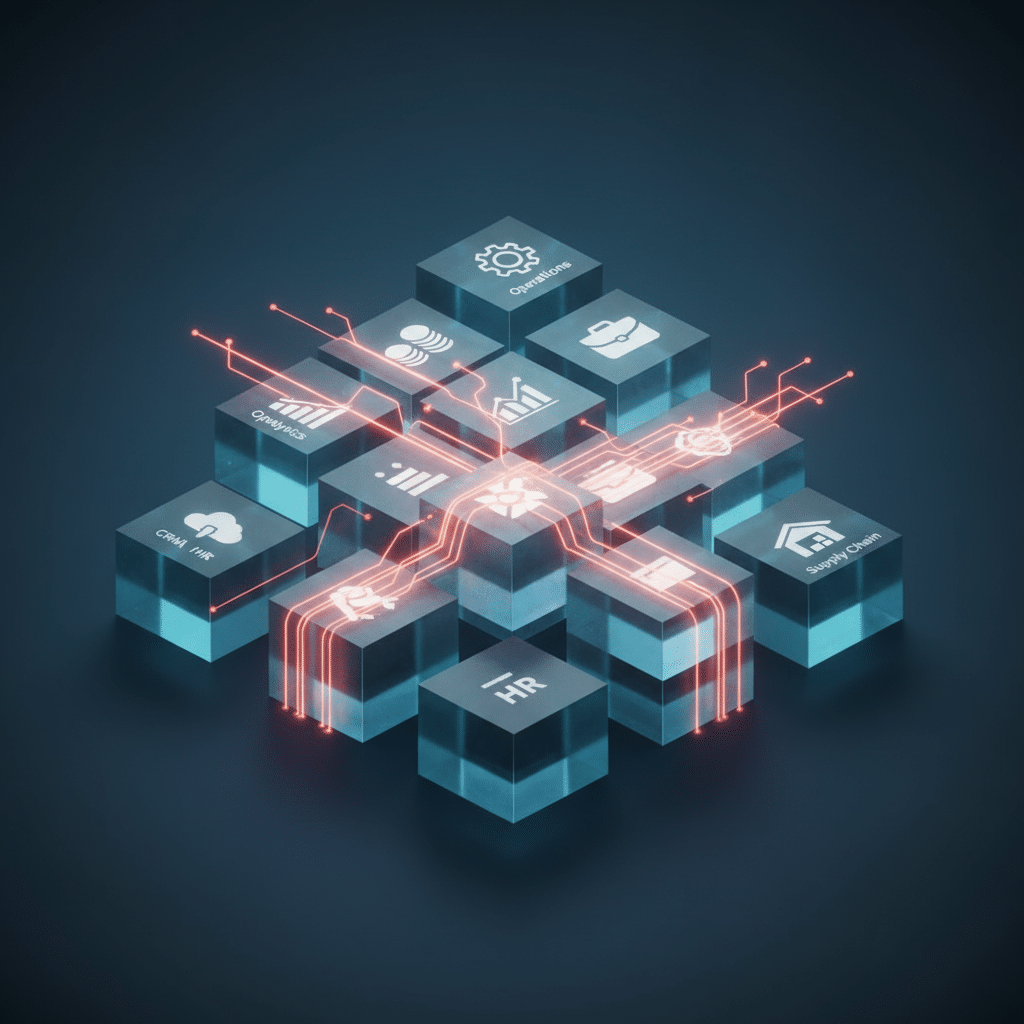
Enterprise Resource Planning (ERP) systems have long served as the central nervous system for businesses, unifying disparate functions like finance, supply chain, and HR into a single source of truth. However, this nervous system is evolving. The growing integration of AI in Enterprise Software is transforming these robust systems from passive data repositories into proactive, intelligent partners. This isn’t a distant future; it’s a strategic shift happening now that determines competitive advantage. For business leaders, understanding this evolution is not just about keeping up with technology—it’s about fundamentally rethinking how their organizations operate, make decisions, and create value. This guide explores the practical applications, tangible benefits, and strategic path for integrating AI into your enterprise architecture.
Beyond Automation: The True Synergy of AI and ERP
The initial wave of technology in business focused on automation—making repetitive tasks faster and less prone to human error. The integration of AI into ERP systems represents a significant leap forward. It’s about moving beyond simple automation to augmentation and intelligent analysis. The goal is no longer just to do things faster, but to do them smarter, with a level of insight that was previously impossible to achieve. This marks a critical step in the AI and ERP transformation journey for modern businesses.
From Reactive Reporting to Predictive Strategy
Traditional ERP systems are excellent at telling you what happened. They can generate detailed reports on last quarter’s sales, current inventory levels, or past production cycles. AI, however, excels at telling you what is likely to happen next. By analyzing historical data, identifying subtle patterns, and correlating external factors (like market trends or weather patterns), AI models can provide predictive forecasts. This shifts the entire operational posture of a company from being reactive to proactive, allowing leaders to anticipate challenges and seize opportunities before they fully materialize.
Democratizing Data with Conversational Interfaces
One of the biggest historical hurdles with ERPs has been their complexity. Accessing specific information often required specialized training and navigating complex menus. AI-powered natural language processing (NLP) is changing this. Employees can now interact with their enterprise software using simple, conversational language. Imagine a sales manager asking their system, “Show me our top-performing products in the southeast region for Q2 and project their sales for Q4,” and receiving an instant, easy-to-understand report. This accessibility empowers more people within the organization to use data effectively in their daily roles.
Key Applications of AI in Enterprise Software Today
The application of AI within enterprise systems is not a monolithic concept. It manifests in specific, high-impact ways across different business functions. These are not theoretical ideas; they are powerful AI business solutions being deployed by forward-thinking companies.
Intelligent Financial Management
The finance department is a prime beneficiary of AI integration. AI algorithms can analyze thousands of transactions in real-time to detect anomalies that might indicate fraud, far exceeding human capacity. They can automate the entire accounts payable process, from reading invoices with optical character recognition (OCR) to matching them with purchase orders and flagging exceptions. For financial planning and analysis (FP&A), AI provides more accurate cash flow forecasting and budget variance analysis by incorporating a wider set of variables.
Smarter Supply Chain and Inventory Control
Perhaps no area sees a more immediate impact from AI than the supply chain. AI-driven demand forecasting analyzes historical sales, seasonality, promotions, and even social media sentiment to predict future product demand with remarkable accuracy. This prevents both stockouts and costly overstocking. In manufacturing, predictive maintenance sensors on machinery feed data into an AI model that can predict equipment failure before it happens, allowing for scheduled maintenance and avoiding unplanned downtime.
Hyper-Personalized Customer Relationship Management (CRM)
Within the CRM module of an ERP, AI acts as a tireless analyst. It can segment customers based on subtle behavioral patterns, predict which clients are at risk of churning, and recommend the next best action for a sales representative to take. AI can also power chatbots that provide 24/7 customer support for common queries, freeing up human agents to handle more complex issues. This leads to a more personalized and responsive customer experience, which directly impacts retention and loyalty.
Streamlined Human Resources (HR)
In HR, AI is helping to find and retain top talent. AI tools can screen thousands of resumes in minutes, identifying the most qualified candidates based on predefined criteria, reducing unconscious bias in the initial screening phase. For existing employees, AI can analyze anonymous feedback and communication patterns to gauge overall employee sentiment and identify potential issues with morale or burnout. It can also curate personalized learning and development paths for each employee, boosting engagement and skill progression.
The Tangible Business Benefits of an AI-Powered ERP
Adopting AI is not just about technological advancement; it’s about achieving measurable business outcomes. The benefits of a smarter enterprise system compound over time, creating a more resilient and competitive organization.
- Drastic Improvements in Operational Efficiency: By automating routine tasks like data entry, invoice processing, and report generation, AI frees up employees to focus on strategic, high-value work. This reduces operational costs and minimizes the risk of human error.
- Superior Data-Driven Decision-Making: With predictive analytics and real-time insights, leaders can move beyond relying on historical reports and intuition. Decisions about inventory levels, marketing spend, and resource allocation become more precise, timely, and impactful.
- Enhanced Agility and Adaptability: In a volatile market, the ability to pivot quickly is crucial. An AI-powered ERP can detect shifts in customer demand or potential supply chain disruptions early, giving the business more time to adapt its strategy and mitigate risks.
- Increased Profitability: The combination of cost savings from efficiency, revenue growth from better sales and marketing, and risk mitigation from predictive insights directly contributes to a stronger bottom line.
Critical Challenges of Implementing AI in ERP
While the potential is immense, the path to a fully integrated, AI-driven enterprise system has its challenges. Acknowledging and planning for these hurdles is essential for a successful implementation.
Data Quality and Governance
An AI model is only as intelligent as the data it learns from. Many organizations suffer from “dirty data”—information that is incomplete, inconsistent, or stored in isolated silos. The first and most critical step in implementing AI in ERP is establishing a robust data governance strategy to ensure data is clean, standardized, and accessible.
Integration Complexity
Many businesses run on a combination of modern and legacy systems. Integrating new AI capabilities with older, custom-built ERP components can be technically complex and resource-intensive. It requires careful planning and expertise to ensure seamless data flow and prevent the creation of new information silos.
Skill Gaps and Change Management
Successfully using AI requires more than just technology; it requires a shift in mindset and skills. Companies often face a shortage of data scientists and AI specialists. Equally important is managing the cultural change within the organization. Employees need to be trained on how to work alongside AI tools, trust their recommendations, and adapt their workflows accordingly.
Strategic Considerations for Your AI Adoption Journey
Approaching AI integration as a strategic initiative rather than a purely technological one is key to maximizing its value. The future of enterprise software belongs to those who plan their adoption journey thoughtfully.
Start with a Clear Business Case
Avoid the temptation to adopt AI for its own sake. Instead, identify a specific, high-impact business problem. Is it inaccurate demand forecasting? Is it slow financial closing periods? Is it high customer churn? Focusing on a clear use case with a measurable outcome will build momentum and demonstrate the value of the investment.
Build a Phased Implementation Roadmap
Trying to overhaul an entire ERP system with AI at once is a recipe for failure. A much more effective approach is to start with a pilot project in a single department or for a single process. Measure the results, learn from the experience, and then scale the solution incrementally across the organization. This agile approach minimizes risk and allows for continuous improvement.
Choose the Right Technology Partner
Few companies have all the necessary AI and data engineering expertise in-house. Partnering with a firm that has a deep understanding of both AI technologies and enterprise business processes is crucial. A good partner will help you define your strategy, clean your data, build and integrate the right models, and ensure your team is equipped to succeed.
Frequently Asked Questions About AI and ERP
-
Is AI going to replace my current ERP system?
-
No, in most cases, AI does not replace your ERP. It enhances it. AI capabilities are typically integrated as an intelligent layer on top of or within your existing ERP, using its data to provide predictive insights and automate complex processes. Your ERP remains the system of record, but it becomes much more powerful.
-
What is the first step to implementing AI in ERP?
-
The foundational first step is a comprehensive data assessment. You need to understand the state of your data—its quality, accessibility, and completeness. Following that, identify a single, high-value business problem you want to solve. Starting small with a clear objective is the key to a successful journey.
-
Can small and medium-sized businesses (SMBs) benefit from AI in their enterprise software?
-
Absolutely. The rise of cloud-based ERP solutions has made AI much more accessible. Many modern cloud ERPs come with pre-built AI and machine learning modules for functions like financial analytics or demand forecasting, allowing SMBs to access advanced capabilities without a massive upfront investment in infrastructure or talent.
-
How do I measure the ROI of an AI integration?
-
ROI should be measured against the specific business problem you set out to solve. Key metrics could include: reduction in inventory carrying costs (from better forecasting), decrease in days sales outstanding (from automated collections), improvement in customer retention rates (from churn prediction), or savings from reduced equipment downtime (from predictive maintenance).
The Future is Intelligent: Are You Ready?
The integration of artificial intelligence is no longer a peripheral topic in discussions about enterprise software; it is the central theme. The future of enterprise software is not just connected—it’s cognitive. Companies that embrace this shift will unlock new levels of efficiency, make smarter and faster decisions, and build a significant competitive moat. The journey from a traditional ERP to an intelligent enterprise system requires careful planning, strategic investment, and the right expertise.
Is your business prepared to make this critical transition? If you’re ready to explore how AI can transform your operations and unlock the true potential of your enterprise data, the team at KleverOwl is here to help. Our experts specialize in creating custom AI and automation solutions that integrate seamlessly with your existing systems.
Let’s build your intelligent future together. Contact us today for a consultation on how to begin your AI transformation journey.