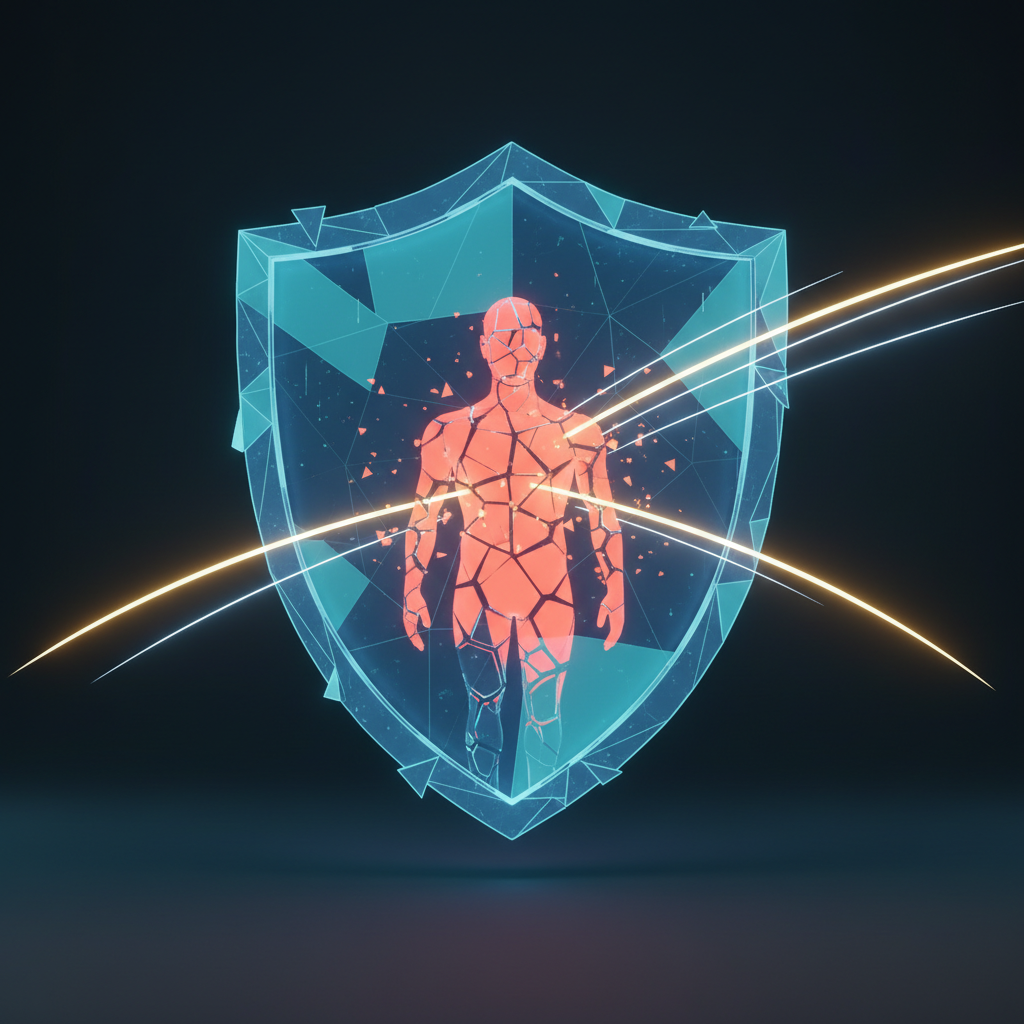
AI Speeds Attacks, But Identity Remains Cybersecurity’s Weakest Link
In the evolving theater of digital conflict, artificial intelligence has emerged as a formidable force multiplier for cybercriminals. Recent analysis, including a notable piece from SecurityWeek, confirms a troubling trend: while AI accelerates the speed and sophistication of attacks, the fundamental point of failure remains stubbornly consistent. The critical vulnerability isn’t a zero-day exploit in a server, but something far more ubiquitous and difficult to patch: identity. Effective AI cybersecurity identity management is no longer just a component of a security strategy; it is the central pillar upon which the entire defense rests. As attackers use AI to craft perfect social engineering lures and automate credential theft, organizations must recognize that the digital keys to the kingdom—our identities—are the primary target.
AI as a Threat Accelerator: The New Generation of Cyberattacks
Artificial intelligence isn’t just making old attack methods faster; it’s creating entirely new paradigms of threat. Attackers are using AI to automate and scale operations that once required significant human effort, drastically shortening the time from initial reconnaissance to successful breach.
Hyper-Personalized Phishing at Scale
Generic phishing emails with poor grammar are becoming a thing of the past. Generative AI models can now instantly produce flawless, context-aware, and highly persuasive emails, text messages, and social media posts. These systems can scrape public data from sources like LinkedIn to craft spear-phishing messages that reference a target’s specific projects, colleagues, and professional interests. This level of personalization, once reserved for high-value targets in state-sponsored campaigns, can now be deployed against thousands of employees simultaneously, significantly increasing the probability of a successful credential compromise. This is one of the most immediate AI cyber threats facing enterprises today.
AI-Powered Malware and Polymorphic Code
Traditional antivirus and endpoint detection solutions rely heavily on signature-based detection to identify known malware. AI turns this model on its head. Malicious actors are using AI to generate polymorphic and metamorphic malware that automatically alters its own code with each new infection. Each variant is unique, rendering signature-based detection useless. This forces defenders into a reactive posture, relying on more complex behavioral analysis to spot malicious activity after it has already begun.
Automating Reconnaissance and Exploitation
The initial phase of an attack often involves scanning an organization’s external footprint for weaknesses. AI-powered tools can automate this process with frightening efficiency. They can identify misconfigured cloud storage, unpatched software, and exposed APIs far faster than a human team. Once a potential vulnerability is found, AI can even help select the most effective exploit and automate the initial intrusion, compressing a process that used to take days or weeks into mere minutes.
Why Identity Remains the Cybersecurity Weakest Link
Despite advancements in network firewalls and endpoint security, breaches continue to make headlines. The overwhelming majority of these incidents share a common root cause: a compromised identity. The focus on identity as the cybersecurity weakest link is not an overstatement; it is the central truth of modern security.
The Human Factor: Predictable and Susceptible
The most sophisticated security system can be undone by a single human error. Employees reuse passwords across personal and professional accounts, respond to urgent-sounding requests without verification, and experience “MFA fatigue” from constant push notifications. Attackers know this and exploit these cognitive biases. AI-driven social engineering preys on our natural tendencies to be helpful, to respond to authority, and to act quickly under perceived pressure, making the human element more vulnerable than ever.
The Expanding Identity Perimeter
Identity is no longer just about human users. The modern enterprise is a complex web of identities, including:
- Human Identities: Employees, contractors, partners, and customers.
- Machine Identities: Servers, virtual machines, and containers.
- Application Identities: APIs, microservices, and service accounts that need to authenticate to each other.
- Device Identities: IoT devices, laptops, and mobile phones.
Each of these identities represents a potential entry point. The proliferation of cloud services and remote work has dissolved the traditional network perimeter, making identity the only consistent control plane. This creates immense identity access management challenges, as security teams must track and secure a vastly larger and more diverse set of credentials.
The Convergence: How AI Supercharges Identity-Based Attacks
The true danger lies where these two trends—AI threat acceleration and identity vulnerability—intersect. AI is not just a general-purpose tool; it is being specifically tuned to exploit the weaknesses inherent in identity and access management.
Deepfake Social Engineering and Vishing
We are entering an era where seeing—or hearing—is no longer believing. AI-powered deepfake technology can now convincingly clone a person’s voice from just a few seconds of audio. Attackers are using this for “vishing” (voice phishing), calling an employee while impersonating their CEO or CFO and directing them to make an urgent wire transfer or provide sensitive data. As the technology improves, we can expect to see real-time deepfake video used in targeted attacks to bypass identity verification checks that rely on video confirmation.
Advanced MFA Bypass Techniques
Multi-Factor Authentication (MFA) is a critical defense, but it’s not foolproof. Attackers are using sophisticated methods to get around it. Adversary-in-the-Middle (AiTM) phishing kits, for example, create a proxy between the user and the legitimate login page. The user enters their credentials and MFA code on the fake site, which are then passed to the real site by the attacker, who captures the resulting session cookie. This cookie allows the attacker to bypass MFA entirely and gain access to the user’s account. AI can help automate the deployment and management of these kits, making sophisticated MFA bypass techniques more widely available.
Fortifying the Core: Practical Strategies for Modern Identity Defense
Given that identity is the primary battleground, organizations must shift their security focus accordingly. A robust, identity-centric defense strategy is essential for surviving the onslaught of AI-powered attacks.
Embrace Phishing-Resistant MFA
Not all MFA is created equal. Methods like SMS codes and push notifications are vulnerable to phishing and fatigue attacks. The gold standard is phishing-resistant MFA, which binds the authentication to the hardware. Technologies like FIDO2/WebAuthn, implemented through security keys (e.g., YubiKey) or platform authenticators (e.g., Windows Hello, Apple Passkeys), create a cryptographic link between the user, their device, and the service they are accessing. This makes it virtually impossible for an attacker to steal a credential or session cookie through a phishing site.
Adopt a Zero Trust Architecture (ZTA)
The core principle of Zero Trust is “never trust, always verify.” It assumes that a breach is inevitable and that no user or device should be trusted by default, regardless of its location. In a Zero Trust model, every access request is rigorously authenticated and authorized before being granted. This approach contains the damage of a compromised identity. If an attacker steals an employee’s credentials, Zero Trust principles like least privilege access and micro-segmentation will prevent them from moving laterally through the network to access sensitive data they are not explicitly authorized for.
Strengthen Identity Governance and Administration (IGA)
You can’t protect what you don’t know you have. Strong IGA practices are crucial for managing the identity lifecycle. This includes:
- Automated Onboarding/Offboarding: Ensuring access is granted promptly when a user joins and, more importantly, revoked instantly when they leave.
- Regular Access Reviews: Periodically having managers certify that their team members’ access rights are still appropriate for their roles.
- Privileged Access Management (PAM): Tightly controlling and monitoring access for administrative accounts, which are prime targets for attackers.
Fighting Fire with Fire: Using AI for Identity Defense
The good news is that AI is not exclusively a tool for attackers. Defensive AI can be a powerful ally, helping security teams detect and respond to identity-based threats faster than any human could alone.
AI-Powered Anomaly Detection
A key aspect of modern AI cybersecurity identity management is behavioral analytics. AI and machine learning models can establish a baseline of normal activity for every user and entity in the network. They learn things like typical login times, geographic locations, devices used, and data access patterns. The system can then instantly flag deviations from this baseline—such as a login from a new country at 3 AM or an accountant suddenly trying to access engineering source code—as high-risk events, triggering an alert or an automated response.
Automated Identity Threat Detection and Response (ITDR)
ITDR solutions are an emerging category of security tools that focus specifically on identity threats. Using AI, they correlate signals from dozens of sources (e.g., Active Directory, cloud identity providers, endpoint agents) to detect indicators of compromise. If an ITDR tool detects an AiTM attack or a successful credential stuffing attempt, it can automatically take action, such as forcing the user to re-authenticate with a phishing-resistant method, suspending the account, or ending all active sessions to evict the attacker immediately.
Frequently Asked Questions About AI and Identity Security
What is the single most important step to protect against AI-powered phishing?
Implementing phishing-resistant Multi-Factor Authentication (MFA) using FIDO2 standards, such as hardware security keys or device-bound passkeys. This method is specifically designed to defeat credential theft via phishing sites, which is the primary goal of most AI-driven phishing campaigns.
Can AI completely replace human cybersecurity analysts?
No. AI is a powerful tool for augmenting human expertise, not replacing it. AI excels at processing vast amounts of data to detect anomalies and automate routine responses. However, human analysts are still essential for strategic thinking, complex threat hunting, interpreting nuanced situations, and leading incident response efforts where critical judgment is required.
How does Zero Trust specifically help with compromised identities?
Zero Trust limits the “blast radius” of a compromised identity. In a traditional network, once an attacker steals a credential, they can often move freely inside the perimeter. With Zero Trust, the compromised identity is still restricted by the principle of least privilege. The attacker can only access the minimal set of resources that the legitimate user was explicitly authorized for, preventing lateral movement and access to high-value assets.
Isn’t implementing a full identity management solution too complex for a small business?
While a full-blown IGA or PAM solution might be complex, small businesses can take highly effective steps. Starting with foundational controls like enforcing strong password policies, mandating phishing-resistant MFA, and practicing least privilege access provides a massive security uplift. Modern cloud-based Identity-as-a-Service (IDaaS) platforms also significantly lower the barrier to entry for advanced identity and access management capabilities.
The Human-Centric Future of Cybersecurity
The rapid evolution of AI has undeniably raised the stakes in cybersecurity. Attackers are faster, smarter, and more scalable than ever before. Yet, their strategy continues to pivot on the same fundamental weakness: the human and machine identities that form the fabric of our digital enterprises. Fortifying this core is the only viable path forward.
The solution is not just about buying more technology; it’s about adopting an identity-first security mindset. It requires a combination of strong technical controls like phishing-resistant MFA and Zero Trust, vigilant governance processes, and a culture of continuous security awareness. As the threats become more intelligent, our defenses must become more focused.
The intersection of AI, application development, and security is complex. Whether you’re looking to build secure applications from the ground up, implement robust AI and automation solutions, or need expert cybersecurity consulting to assess and strengthen your identity defenses, the team at KleverOwl has the expertise to help you navigate this new frontier. Secure your organization by securing its identities.