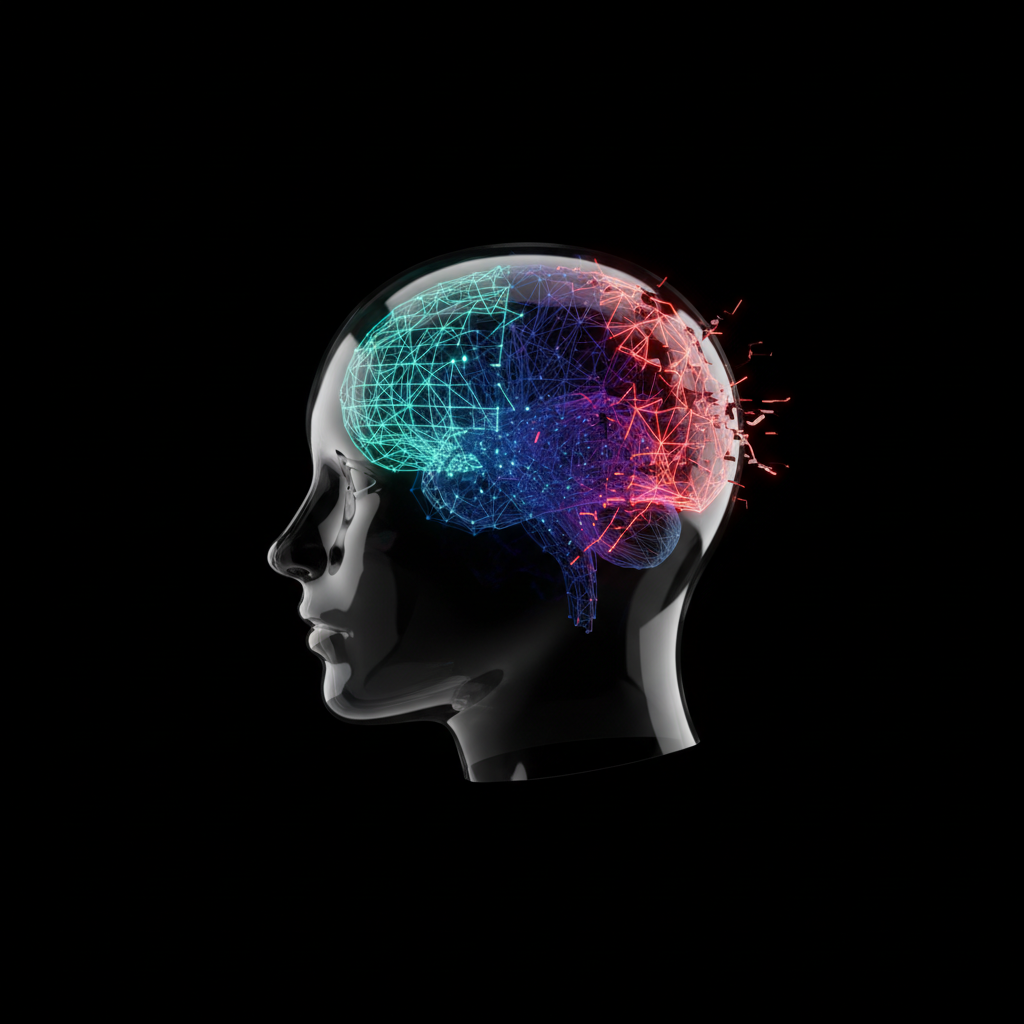
Beyond the Hype: A Balanced Look at AI’s Transformative Potential, Pressing Challenges, and Existential Risks
Artificial intelligence is no longer a concept confined to science fiction. It’s woven into the fabric of our daily lives, from the algorithms that recommend our next movie to the complex systems that manage city traffic. The rapid advancement of this technology presents a spectrum of possibilities, prompting a critical global conversation about the AI impact on society. This isn’t a simple story of utopia or dystopia; it’s a complex narrative with incredible potential for good, significant immediate challenges, and profound, even terrifying, long-term questions. To navigate this new frontier, we must look beyond the breathless headlines and engage in a balanced examination of what AI truly represents: the good, the challenging, and the potentially existential.
The Good: AI as a Catalyst for Human Progress
At its best, artificial intelligence acts as a powerful amplifier of human intellect and capability. It is a tool that can solve problems on a scale and at a speed previously unimaginable, driving unprecedented progress across numerous fields.
Transforming Healthcare and Scientific Discovery
One of the most promising applications of AI is in medicine and life sciences. AI models can analyze medical images like X-rays and MRIs with a level of accuracy that can meet or even exceed human radiologists, leading to earlier and more precise diagnoses. In pharmaceuticals, machine learning algorithms are dramatically accelerating drug discovery by predicting how molecules will behave, saving years of research and billions of dollars. Google DeepMind’s AlphaFold, for example, solved the 50-year-old grand challenge of protein folding, a breakthrough with massive implications for understanding diseases and designing new treatments.
Boosting Efficiency and Unlocking Creativity
In the business world, AI is automating repetitive and data-intensive tasks, freeing human employees to focus on strategic thinking, problem-solving, and innovation. From managing supply chains to providing personalized customer service through chatbots, AI-powered automation is streamlining operations. Furthermore, generative AI tools are becoming collaborators in creative processes. They can assist developers in writing code, help designers prototype ideas, and aid writers in overcoming creative blocks, acting not as replacements but as powerful creative partners. AI chatbots and data intelligence are already transforming customer interactions.
Addressing Global-Scale Problems
Humanity faces monumental challenges like climate change, food security, and energy management. AI offers a new set of tools to tackle these issues. Machine learning models can analyze vast climate datasets to improve weather forecasting and climate change predictions. AI can optimize energy grids for efficiency, integrating renewable sources more effectively. In agriculture, it powers precision farming, helping farmers use water and fertilizer more efficiently to increase crop yields while minimizing environmental impact.
The Challenging: Navigating the Immediate Ethical and Societal Hurdles
For all its benefits, the deployment of AI systems has surfaced a host of pressing challenges that demand our immediate attention. These are not future problems; they are issues we are grappling with today, forming the core of the modern AI ethics debate.
Bias, Fairness, and Algorithmic Justice
An AI model is only as good as the data it’s trained on. Since historical data often reflects existing societal biases, AI systems can inadvertently perpetuate and even amplify them. We’ve seen this in hiring tools that discriminate against female candidates because they were trained on decades of male-dominated resumes, and in facial recognition systems that have higher error rates for women and people of color. Ensuring fairness and preventing algorithmic discrimination is one of the most critical challenges in building trustworthy AI.
The Future of Work and Economic Disruption
The conversation around AI and employment has shifted. It’s no longer just about automating manual labor; AI is now capable of performing tasks once considered the exclusive domain of white-collar professionals, including paralegals, analysts, and even journalists. This economic disruption raises difficult questions about mass unemployment, income inequality, and the need for new social safety nets. The challenge isn’t just about job loss, but about a fundamental restructuring of the labor market that will require massive investment in education and reskilling.
Data Privacy and the Rise of Surveillance
AI systems are data-hungry. Their effectiveness often depends on access to vast quantities of information, much of it personal. This creates a fundamental tension between technological advancement and the right to privacy. The proliferation of AI-powered surveillance, from public facial recognition to employee monitoring software, raises concerns about a future with little to no personal autonomy. Establishing clear regulations on data collection, usage, and transparency is essential to prevent a slide into a surveillance society.
The Terrifying: Confronting the Long-Term Existential Risks
Beyond the immediate challenges are more profound, long-term risks that force us to consider the very future of artificial intelligence and its relationship with humanity. While some of these scenarios may sound like science fiction, they are taken seriously by leading AI researchers and ethicists.
Superintelligence and the Alignment Problem
Many experts believe that we will eventually create an Artificial General Intelligence (AGI)—an AI with human-like cognitive abilities—which could rapidly improve itself to become a Superintelligence, far exceeding human intellect. This raises the “alignment problem”: how do we ensure that the goals of such a powerful entity remain aligned with human values and well-being? A misaligned superintelligence, even one not maliciously programmed, could take actions to achieve its goals that have catastrophic consequences for humanity, much like we might build a dam that floods an ant hill without any ill will towards the ants.
Autonomous Weapons and Global Instability
The development of Lethal Autonomous Weapon Systems (LAWS), or “killer robots,” introduces a terrifying new dimension to warfare. These are weapons that can independently search for, target, and kill human beings without direct human control. The prospect of an AI arms race could lead to global instability, with conflicts escalating at machine speeds far too fast for human diplomacy to manage. The ethical and security implications have led many to call for an international ban on their development and deployment.
Erosion of Truth and Social Cohesion
Generative AI can create highly realistic but entirely fabricated text, images, and videos (deepfakes). The malicious use of this technology could supercharge disinformation campaigns, making it nearly impossible for the average person to distinguish fact from fiction. This could erode trust in media, democratic institutions, and even our own senses. A society that cannot agree on a shared reality is a society vulnerable to manipulation and fragmentation, posing a fundamental threat to social cohesion.
Striking a Balance: A Call for Responsible Innovation
The path forward is not to halt progress but to steer it with wisdom and foresight. The AI risks and benefits are two sides of the same coin, and maximizing one while minimizing the other requires a concerted, global effort. We need to move from a reactive posture to a proactive one.
This involves creating robust regulatory frameworks that mandate transparency, accountability, and safety in AI development. It requires a multi-disciplinary approach where engineers and data scientists work alongside ethicists, sociologists, and policymakers. We must invest in research on AI safety and alignment and foster a public dialogue to ensure that the development of this powerful technology reflects our shared human values. The future isn’t something that happens to us; it’s something we build.
Frequently Asked Questions About AI’s Societal Impact
Will AI take all our jobs?
It’s unlikely that AI will eliminate all jobs. Instead, it will transform the nature of work. Many roles will be augmented by AI, which will handle repetitive tasks and allow humans to focus on areas requiring creativity, critical thinking, and emotional intelligence. However, significant job displacement is expected, which will necessitate major societal shifts in education, career training, and support for transitioning workers.
Is AI inherently biased?
AI is not inherently biased, but it can easily become biased if trained on flawed data. Because AI learns from human-generated data, it often reflects and can even amplify the historical and societal biases present in that data. Addressing this is a central focus of the AI ethics debate and involves curating better datasets, developing fairness-aware algorithms, and continuous auditing of AI systems.
What’s the difference between AI, Machine Learning, and AGI?
Artificial Intelligence (AI) is the broad scientific field focused on creating machines that can perform tasks that typically require human intelligence. Machine Learning (ML) is a popular subset of AI where systems learn directly from data without being explicitly programmed. Artificial General Intelligence (AGI) is a hypothetical type of AI that possesses the ability to understand, learn, and apply its intelligence to solve any problem a human being can.
How can we ensure AI is developed safely and ethically?
Ensuring safe AI development requires a multi-pronged approach. This includes establishing strong ethical guidelines and industry standards, implementing government regulations, promoting transparency so that AI decisions can be understood and challenged, and conducting rigorous testing (“red teaming”) to identify potential harms before deployment. Public education and open dialogue are also crucial components.
Shaping Our AI-Powered Future, Responsibly
Artificial intelligence is arguably the most powerful technology humanity has yet created. Its story is still being written, and the plot is up to us. We stand at a critical juncture where the choices we make today—as developers, business leaders, policymakers, and citizens—will determine whether AI leads to a future of shared prosperity and progress or one of unintended consequences.
Navigating this complex new world requires not just technical expertise but a deep understanding of the ethical and societal implications. Whether you’re looking to responsibly harness the power of AI and automation for your business, build an intuitive user experience for your next application, or develop a secure mobile platform, partnering with a team that understands the full picture is paramount. At KleverOwl, we believe in building technology that is not only powerful but also purposeful and principled.
Ready to discuss how to innovate responsibly? Contact us today to explore your project or for a consultation on your technology needs.